How internet connectivity is reshaping smart hardware design

Internet connectivity is now part of the product architecture
Internet connectivity is no longer just the feature that lets a smart device talk to an app. For smart hardware, it now influences product architecture, user experience, security, power consumption, update strategy and long-term support. A connected camera, sensor, router, gateway or appliance has to operate across local networks, cloud services, mobile apps and increasingly standardized ecosystems such as Matter and Thread. The key design question is not simply whether the device can get online. It is whether the product remains useful when bandwidth changes, when a home network is crowded, when a cloud service is unavailable or when security requirements change after shipment.
That shift affects companies that build, evaluate or buy connected hardware. Faster broadband and better Wi-Fi help, but reliable connectivity still depends on protocol choice, fallback behavior, local control, diagnostics and software maintenance. For more articles in this area, visit the connectivity section.
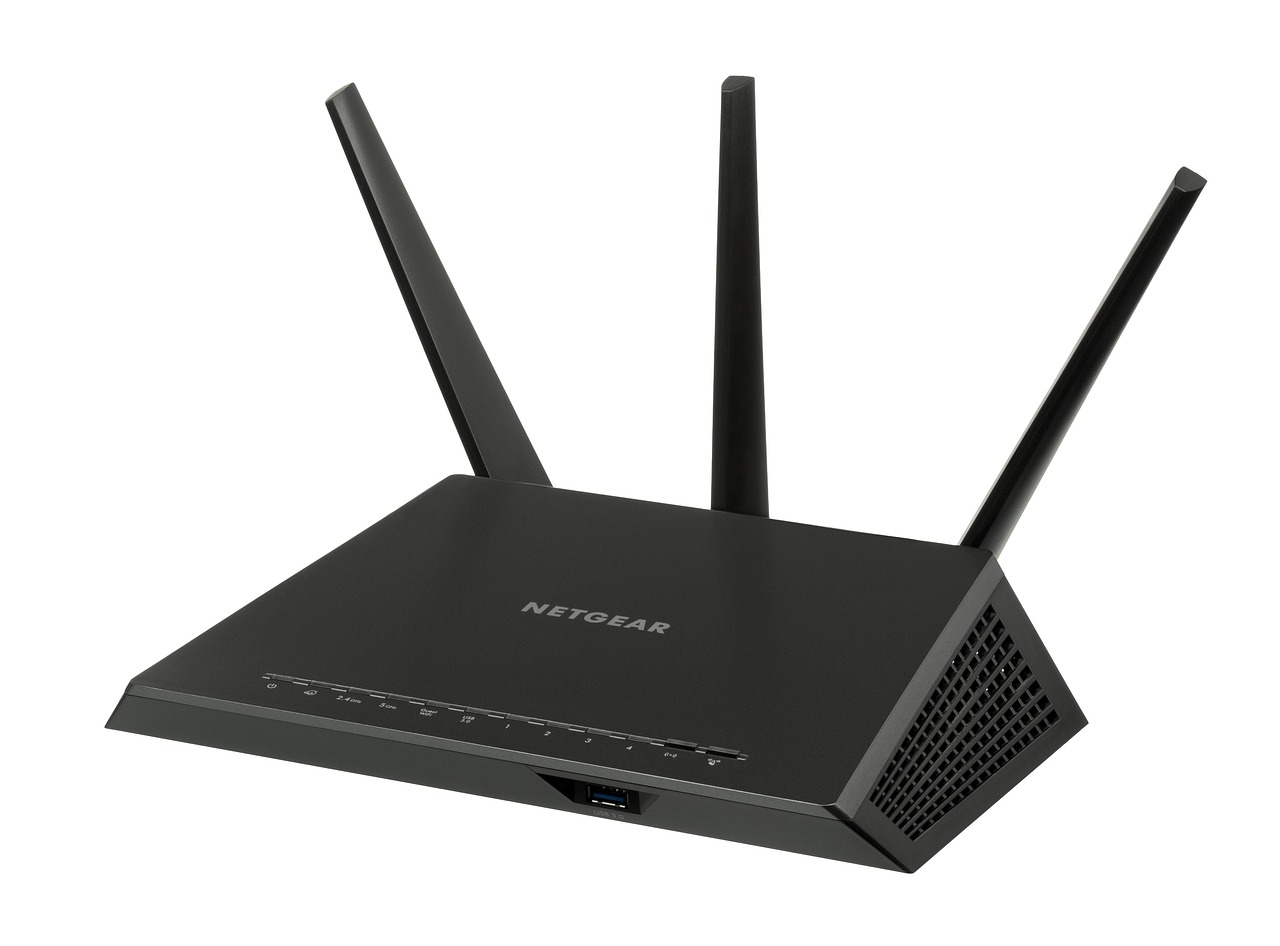
What internet connectivity means for smart hardware
In consumer language, internet connectivity often means a device can access online services. In smart hardware design, the term is broader. It covers how the device joins a network, how it authenticates, how it sends and receives data, how it behaves when the connection is weak and how it receives updates over time.
A practical way to define connectivity is to separate it into four layers:
- Access layer: the physical and radio technology, such as Ethernet, Wi-Fi, Thread, Bluetooth LE or cellular.
- Network layer: how devices route traffic locally or to the internet, including IPv6 support, border routers, gateways and firewalls.
- Application layer: the service model, including local APIs, cloud APIs, mobile apps, voice assistants and automation platforms.
- Lifecycle layer: provisioning, certificates, firmware updates, vulnerability handling, diagnostics and end-of-support policy.
This layered view helps avoid one of the most common mistakes in connected product planning: treating internet access as a yes-or-no feature. A product may have Wi-Fi but poor onboarding. It may have a cloud app but no useful local behavior. It may stream video well on a fast network but fail to recover cleanly after a router reboot. Each failure is a connectivity issue, even if the radio itself is working.
Policy and infrastructure expectations are also rising. In the United States, the Federal Communications Commission maintained 100 Mbps download and 20 Mbps upload as its fixed broadband benchmark in its 2026 Section 706 Report, a benchmark first adopted in the 2024 report. That does not mean every device needs high throughput. It does show that regulators and users increasingly judge connectivity by whether it can support work, health, education, entertainment and emergency communication, not just basic access.
Standards are shifting connectivity from single apps to shared infrastructure
The most important change in smart hardware connectivity is the move away from isolated product islands. A device that only works well inside one vendor app is becoming less attractive than a device that can join a broader network, support standardized commissioning and remain manageable across ecosystems.
Wi-Fi 7 raises expectations for local wireless performance
The Wi-Fi Alliance introduced Wi-Fi CERTIFIED 7 in January 2024. The certification program highlights features such as 320 MHz channels where 6 GHz spectrum is available, Multi-Link Operation and 4K QAM. For smart hardware, the key point is not peak speed alone. Multi-Link Operation is designed to improve throughput, latency and reliability by allowing devices to use multiple links more flexibly.
That matters for high-bandwidth and latency-sensitive categories such as security cameras, AR or VR accessories, home hubs, media devices and edge AI appliances. It does not remove the need for careful engineering. Wi-Fi 7 performance still depends on client support, access point capability, spectrum availability, distance, interference and backhaul quality. A smart device should be designed to recover from congestion and temporary loss, not assume ideal network conditions.
Thread and Matter are changing the smart home network model
Thread 1.4, released for implementation in 2024, addressed practical problems that had become visible in real deployments: multiple border routers, inconsistent network formation, diagnostics and the need for a standard path from Thread networks to the internet. Thread Group materials describe Thread as an IP-based low-power mesh networking technology intended for connected home and commercial IoT devices.
Matter has also expanded quickly. Matter 1.5, announced by the Connectivity Standards Alliance in November 2025, added support for cameras, closures, soil sensors and additional energy management capabilities. Matter 1.5.1, released in March 2026, refined camera and doorbell performance. Matter 1.6, announced on June 17, 2026, focused less on adding device categories and more on setup, multi-ecosystem management and context-driven control.
The direction is clear: connectivity is becoming infrastructure. Wi-Fi access points, Thread border routers, Matter controllers and cloud services increasingly need to work together. For hardware teams, product planning should include not only the device radio but also the home or building network that the product is expected to use.
| Development | Date | Why it matters for smart hardware |
|---|---|---|
| Wi-Fi CERTIFIED 7 introduced | January 2024 | Higher throughput and reliability features raise expectations for access points, hubs and bandwidth-heavy devices. |
| FCC adopts 100/20 Mbps fixed broadband benchmark | 2024 report, maintained in 2026 | Shows that modern connectivity expectations include upload performance, not only download speed. |
| Thread 1.4 released | 2024 | Improves mesh consistency, border router behavior, diagnostics and internet reachability for low-power devices. |
| EU Cyber Resilience Act enters into force | December 2024 | Moves connected product security closer to a mandatory lifecycle obligation for products placed on the EU market. |
| Matter 1.5 and 1.5.1 expand device support | November 2025 and March 2026 | Extends interoperability to more complex device categories, including cameras and related media use cases. |
| Matter 1.6 announced | June 2026 | Improves setup, multi-ecosystem coordination and context-aware device behavior. |
A practical connectivity stack for device decisions
No single connectivity technology is right for every smart hardware product. The best choice depends on data rate, power budget, installation environment, latency tolerance, cost, mobility, security requirements and expected product life. The framework below is more useful than choosing a protocol by popularity.
| Connectivity option | Strong fit | Main limitation |
|---|---|---|
| Ethernet | Gateways, cameras, industrial controllers, fixed hubs and devices needing stable backhaul | Requires cabling and limits placement flexibility |
| Wi-Fi | High-bandwidth devices, appliances, cameras, displays and home electronics | Higher power use than low-power mesh options and performance depends on local network quality |
| Thread | Low-power sensors, locks, lighting controls and smart home devices needing mesh behavior | Requires border router infrastructure for internet and ecosystem access |
| Bluetooth LE | Provisioning, wearables, short-range accessories and low-data interactions | Not ideal as the only path for always-on internet services |
| Cellular IoT | Outdoor, mobile, remote or utility devices without reliable local broadband | Module cost, data plans, coverage variation and power management |
For many products, the answer is a hybrid stack. A smart lock may use Thread for daily operation, Bluetooth LE for setup and a Matter ecosystem for control. A camera may use Wi-Fi for video, local storage for resilience and cloud access for remote viewing. An industrial sensor may use a local mesh or wired field network behind a cellular or Ethernet gateway.
The design priority should be graceful degradation. A connected product should make clear which features require the internet and which can still operate locally. A thermostat should not lose basic control because a cloud endpoint is unavailable. A lock should preserve safe physical operation even when an app cannot reach it. A gateway should queue non-critical telemetry rather than repeatedly failing in a way that drains battery or overwhelms a network.
Security, updates and lifecycle support now define connected quality
Every internet-connected device expands the attack surface of the network it joins. That is why cybersecurity has moved from an engineering concern to a product requirement, a procurement factor and, in some markets, a regulatory issue. See also: BUYING GUIDES.
NIST’s consumer IoT cybersecurity profile identifies baseline capabilities commonly needed for consumer IoT products, including outcomes that apply to the whole product rather than only the physical device. The FCC’s U.S. Cyber Trust Mark program is a voluntary labeling framework for wireless consumer IoT products that meet defined cybersecurity requirements. In Europe, the Cyber Resilience Act entered into force in December 2024 and requires manufacturers to place compliant products with digital elements on the EU market by 2027, with lifecycle cybersecurity obligations.
For smart hardware, these developments point to a practical conclusion: connectivity cannot be separated from updateability. If a product connects to the internet but cannot receive secure updates, rotate credentials, report its software version or handle vulnerability disclosures, the connectivity feature becomes a long-term liability.
Hardware teams should treat the following as part of the connectivity specification, not as optional documentation:
- Secure onboarding with unique credentials rather than shared default passwords.
- Encrypted communication for device-to-app, device-to-cloud and device-to-device traffic where appropriate.
- Signed firmware updates and rollback protection.
- A clear support period for security updates.
- Local diagnostics that can distinguish radio issues, router issues, cloud outages and device faults.
- Data minimization so that the device sends only what the function actually requires.
- Recovery behavior after power loss, router replacement, certificate expiry or failed updates.
These requirements are especially important for devices that remain installed for years, such as cameras, access controls, thermostats, smart meters, building sensors and gateways. A smartphone may be replaced every few years, but connected infrastructure often stays in service much longer.
How to evaluate internet connectivity before release or purchase
A useful connected hardware review should test more than nominal speed. It should examine the situations users actually experience: crowded apartments, weak signal rooms, router changes, temporary ISP outages, cloud downtime, app reinstallations and mixed ecosystems.
For product teams, the evaluation can be organized around eight questions:
- What must work offline? Define safety, access and basic control functions that should not depend on the cloud.
- What data rate is truly required? A camera and a temperature sensor have very different needs; do not overbuild one or underbuild the other.
- How is the device commissioned? Setup should be secure, repeatable and understandable after a router or phone replacement.
- How does the device recover? Test power loss, DNS failure, expired sessions, weak signal and failed firmware downloads.
- Which ecosystems are required? Decide whether Matter, Thread, Wi-Fi certification or other interoperability paths are necessary for the target market.
- How will support diagnose issues? Connectivity failures should produce meaningful status information, not only a generic offline message.
- What is the update commitment? Internet connectivity implies a continuing security and maintenance relationship.
- Which regional rules apply? A device sold internationally may face different radio, privacy, cybersecurity and labeling expectations.
For buyers and integrators, the same logic applies in simpler form. Look for clear statements about supported networks, local control, update policy, ecosystem compatibility and security features. A lower-cost device can become expensive if it requires repeated resets, loses automations after network changes or stops receiving updates while still installed.
Frequently asked questions
Does every smart hardware product need internet connectivity?
No. Some devices only need local control or short-range communication. However, if a product offers remote control, cloud automation, firmware updates, monitoring, voice assistant support or cross-ecosystem integration, internet connectivity becomes part of the product’s core design and support model.
Is Wi-Fi always better than Thread or Bluetooth LE?
No. Wi-Fi is strong for bandwidth-heavy devices, but it is often not the best option for small battery-powered sensors. Thread is designed for low-power IP-based mesh networking, while Bluetooth LE is useful for provisioning and short-range interactions. Many modern products combine more than one option.
Why does upload speed matter for connected devices?
Upload speed affects cameras, video doorbells, remote diagnostics, cloud backups, telemetry and multi-user access. A network with strong download performance but weak upload performance may still struggle with devices that send video or frequent status data to remote services.
What is the most important design principle for reliable connectivity?
Design for imperfect networks. A smart device should recover after outages, explain connection problems clearly, preserve essential local functions and update securely. Real homes and buildings contain interference, old routers, changing passwords and mixed ecosystems; reliable products are built with those conditions in mind.
Internet connectivity is becoming less about adding an online feature and more about building a dependable connected system. The strongest smart hardware designs will combine the right access technology, interoperable standards, secure lifecycle management and clear behavior when the network is not perfect.