Gutter repair tips for safer drainage and fewer repeat leaks

Start with the real goal of gutter repair
Good gutter repair is not just about stopping the drip you can see. The real objective is to move roof runoff away from fascia, siding, walkways, and the foundation without adding a weak point somewhere else in the system. These gutter repair tips start with diagnosis, then cover practical fixes for leaks, sagging sections, loose fasteners, blocked downspouts, and poor drainage. Safety is part of the job: ladder work should follow recognized guidance such as the 4-to-1 ladder angle, three points of contact, and avoiding overreach. For more home upkeep checklists, see the Maintenance Tips section.
The most useful repair often starts with a water test. A dry gutter can hide separated seams, pinholes, poor slope, or a downspout restriction. After clearing debris, run water from a hose into the high end of the gutter and watch where it ponds, spills, or escapes. That short test helps determine whether the right fix is sealant, new hangers, a slope adjustment, downspout clearing, or a larger replacement plan.
Inspect safely before choosing a repair
Many gutter defects are simple, but the inspection location may not be. Gutters sit at the roof edge, where wet surfaces, loose leaves, overhead power lines, and unstable ladder footing can increase risk. OSHA and NIOSH ladder safety guidance emphasizes basic practices that also apply to non-professional maintenance: set an extension ladder at a stable angle, keep three points of contact while climbing, avoid standing on top rungs, and do not lean sideways to reach one more section.
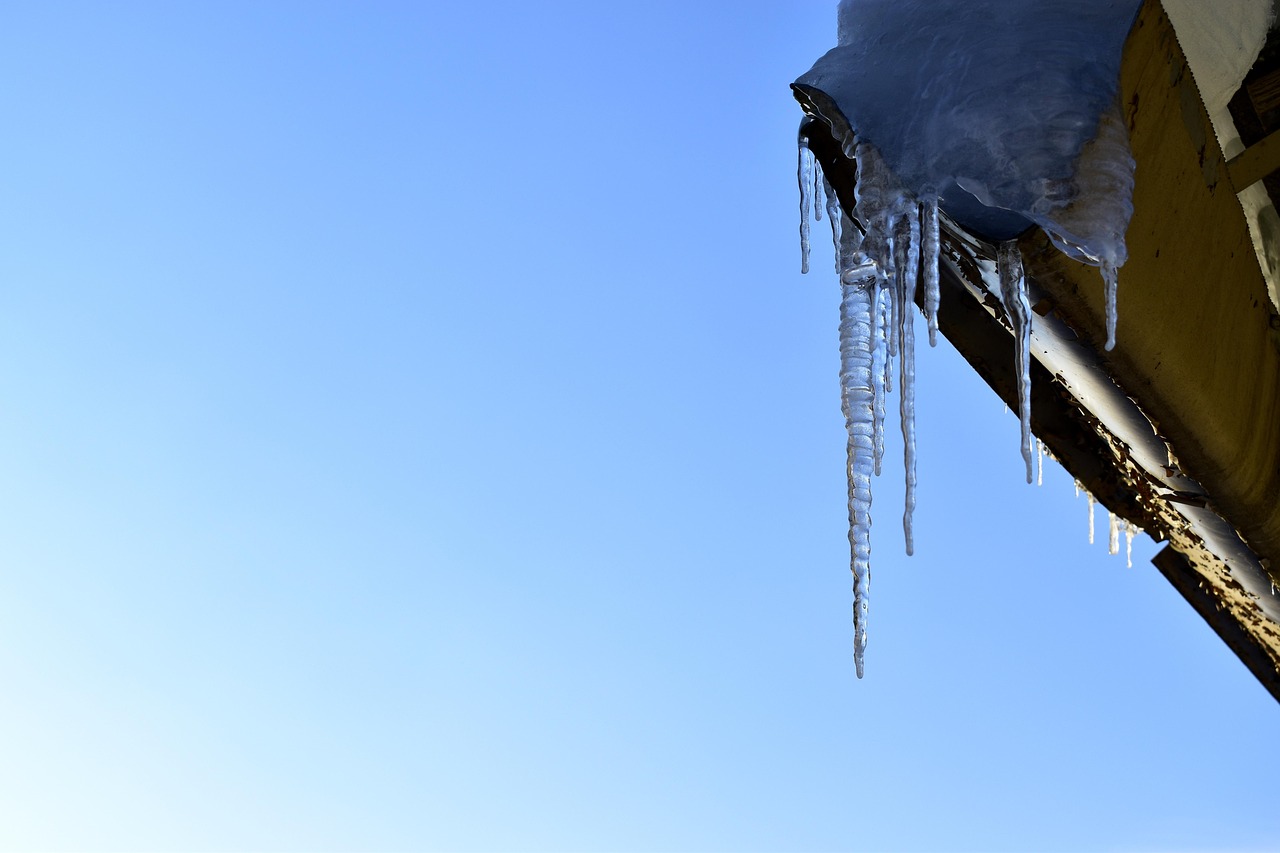
Before climbing, walk the property from the ground. Look for stains below joints, peeling paint on fascia, soil erosion under downspouts, water marks on siding, or mulch washed away near the foundation. If the roofline is high, use binoculars or a phone camera zoom from a safe position. If the gutter is above one story, close to electrical service lines, attached to rotted fascia, or blocked by ice, treat it as a higher-risk repair rather than a routine cleaning task.
- Do inspect after rainfall. Fresh water trails show the actual failure path better than a dry gutter.
- Do check the ground. A ladder should sit on firm, level footing, not on wet mulch, loose gravel, or a sloped walkway.
- Do stop if the fascia moves. Loose or rotted wood can make hanger repairs unreliable and may require carpentry first.
- Do not overreach. Move the ladder more often instead of stretching across a long gutter run.
Match the symptom to the likely cause
A gutter leak is often the visible symptom, not the root cause. Sealing every drip without understanding the water path can trap water in the wrong place or shift the failure to the next joint. Use the table below to narrow the repair path before buying parts.
| Visible problem | Likely cause | Repair direction |
|---|---|---|
| Water drips from a corner or joint | Failed seam sealant, separated fitting, or movement from thermal expansion | Clean and dry the joint, remove loose sealant, reseal with gutter-compatible sealant, and refasten if needed |
| Water spills over the front edge | Debris blockage, undersized outlet, clogged downspout, or incorrect slope | Clear the run, flush the downspout, then test slope and outlet flow |
| Standing water remains after testing | Low spot, sagging hanger, or gutter pitched away from the outlet | Re-secure hangers and adjust pitch toward the downspout |
| Gutter pulls away from fascia | Loose spikes, damaged hangers, overloaded debris, or softened fascia board | Replace weak fasteners with proper hidden hangers, but repair fascia rot first |
| Water pools near the foundation | Short downspout extension, disconnected elbow, or discharge toward the house | Reconnect downspout parts and direct water away from the foundation according to local practice and site grading |
Industry water-management guidance, including the International Residential Code in certain soil conditions and ICC rain-management materials, points to the same broad principle: roof drainage should be controlled and directed away from foundation walls. Local code details vary, so treat national model-code language as a reference point, not a substitute for local requirements.
Fix common gutter leaks without creating a new failure point
Seam and corner leaks are among the most common repairs on sectional gutters. The outcome depends heavily on surface preparation. Sealant applied over damp debris, oxidized metal, or loose old caulk may appear to work briefly, then fail during the next storm.
Clean and dry the repair area
Remove leaves, grit, and loose old sealant from inside the gutter. A plastic putty knife is often safer for painted aluminum than aggressive scraping. Wipe the area dry and allow it to air out if moisture is trapped in the joint. For metal gutters, use a product labeled for gutter seams or exterior metal water exposure. For vinyl systems, follow the manufacturer’s compatibility guidance because some sealants do not bond well to flexible plastics.
Seal the inside path, not just the outside drip
Water travels along seams before it falls. If you seal only the outside edge where the drip appears, water may keep entering the joint from above and push the patch loose. Apply sealant to the inside seam where water flows. Press it into the joint and feather the edges so water can pass over it rather than hit a ridge.
Use patches only when the surrounding material is sound
Small holes may be patched with compatible metal flashing or a repair patch bedded in gutter sealant. However, a patch is only as strong as the gutter around it. If the metal is thin, rusted, cracked across a wide area, or flexing under light pressure, replacing that section is usually more reliable than making repeated spot repairs.
Correct sagging, slope, and hanger problems
A leak-free gutter can still fail if it sags or holds water. Standing water adds weight, attracts debris, and can freeze in cold climates. It also reduces working capacity before the next storm because part of the gutter is already filled.
Start by identifying the outlet end and the high end. The goal is a slight, consistent pitch toward the downspout. Many installers use modest pitch targets rather than a dramatic slope, because a steep gutter line can look uneven and may not fit the fascia well. Instead of relying on guesswork, stretch a string line along the gutter edge or use a level, then confirm performance with a hose test.
Loose spikes are common on older systems. Modern hidden hangers with screws often provide a stronger hold, but they must be anchored into sound fascia or rafter-tail backing. If the fascia board is soft, cracked, or water-stained, replacing fasteners alone is not a complete repair. The wood may need repair or replacement before the gutter has a stable base.
- Replace missing hangers. Wide gaps between supports allow the gutter to bow under water and debris weight.
- Do not overtighten. Crushing the gutter profile can distort the water path and weaken the front lip.
- Re-test with water. After each adjustment, confirm that water reaches the outlet without leaving a low pool.
- Check fascia condition. Paint blistering, softness, or dark staining can signal a water problem behind the gutter.
Do not ignore downspouts and discharge points
Downspout problems are easy to mistake for gutter problems. If the gutter fills and spills near the outlet, the vertical pipe may be blocked by leaves, roof granules, seed pods, or a crushed elbow. Disconnect the bottom elbow where practical and flush water from the top. If water backs up immediately, the blockage is near the outlet. If water runs but moves slowly, check each elbow and horizontal extension.
The discharge point matters because roof runoff is concentrated water. Building-science guidance consistently warns that water dumping near the house can saturate soil around the foundation and contribute to basement or crawlspace moisture problems. University extension resources on basement moisture also identify missing or poorly performing gutters and downspouts as contributors to water near foundation perimeters. See also: BUYING GUIDES.
Use downspout extensions, splash blocks, underground leaders, or daylight discharge where appropriate for the site. Avoid sending water onto a neighbor’s property, across a public sidewalk where it may freeze, or back toward the house because of negative grading. If the property has underground drains, confirm that they are open before relying on them. A buried pipe that is crushed or clogged can make the gutter look defective when the real restriction is below grade.
Repair or replace the gutter section?
Some repairs are worth doing immediately; others only postpone replacement. The decision depends on material condition, the number of failures, and whether water is damaging adjacent building components. One isolated seam leak on a solid gutter is a normal maintenance repair. Multiple leaks along a bowed, oxidized, or poorly supported run may point to a system-level problem.
| Repair is usually reasonable when | Replacement may be smarter when |
|---|---|
| The leak is limited to one joint or corner | Several joints leak along the same run |
| The gutter profile is straight and firmly attached | The run is bent, twisted, sagging, or pulling away repeatedly |
| Fascia wood is solid | Fascia is rotted or fasteners no longer hold |
| Small holes are surrounded by strong material | Metal is rusted through or vinyl is brittle and cracked |
| Water drains correctly after cleaning and resealing | Pitch cannot be corrected without rebuilding the run |
Climate also affects the choice. Areas with freeze-thaw cycles, heavy tree cover, or intense seasonal rainfall put more stress on patched seams and hangers. A repair that is reasonable in a mild, dry region may be short-lived under snow load, ice, or frequent debris buildup.
Where smart hardware can add value
Smart hardware will not replace physical gutter repair, but it can make maintenance more predictable. A simple moisture sensor in a basement or crawlspace can alert you when drainage problems start showing up indoors. A weather station or rain gauge can help distinguish between overflow during an extreme storm and a system that overflows in moderate rain. Outdoor cameras can sometimes show which downspout or corner spills during rainfall without requiring someone to stand outside in unsafe conditions.
Use these tools as monitoring aids, not as proof that the gutter is fixed. A sensor can show that water reached a threshold; it cannot identify whether the cause was a clogged outlet, a broken elbow, negative grading, or a cracked foundation detail. The practical approach is to combine observation, water testing, and basic monitoring so small drainage issues are found before they become repeated moisture events.
Frequently asked questions
How often should gutters be checked?
Most homes benefit from inspection at least twice a year, often in spring and after fall leaf drop. Homes under trees, near seed-producing plants, or in storm-prone areas may need more frequent checks. Also inspect after major wind or hail events because hangers, seams, and downspout elbows can shift.
Can I repair gutters in the rain?
Emergency clearing may be necessary during wet weather, but most sealing repairs should wait until the gutter is clean and dry. Sealant applied to wet debris or flowing water is unlikely to bond well. If water is entering the home, focus first on temporary safe diversion from the ground where possible.
Why does my gutter overflow even after cleaning?
The most common reasons are a clogged downspout, poor slope, a low spot, an undersized outlet, or water arriving too fast from a large roof area. Flush the downspout, test the gutter with a hose, and watch whether water reaches the outlet or stalls along the run.
Are gutter guards a repair for bad gutters?
Gutter guards can reduce certain debris problems, but they do not fix poor slope, loose hangers, leaking seams, rotted fascia, or bad downspout discharge. Install guards only after the gutter itself drains correctly and the attachment points are sound.
When should a professional handle the repair?
Call a qualified contractor when the gutter is high, the roof edge is difficult to access, fascia boards appear rotted, electrical lines are nearby, or repeated repairs have failed. Professional help is also sensible when correcting long runs, complex roof drainage, or underground discharge issues.
Final checklist before calling the job done
A finished gutter repair should pass a simple performance test. Water should enter the gutter, move toward the outlet, pass through the downspout, and discharge away from the house without dripping from seams or overflowing normal sections. The gutter should sit firmly against sound fascia, hangers should be secure, and the downspout should remain connected from outlet to discharge point.
Document the repair with a few photos, especially if you adjusted slope or replaced hangers. After the next heavy rain, inspect from the ground and confirm that the same symptom has not returned. The most useful gutter repair tips are straightforward: diagnose the water path, work safely, repair the actual cause, and verify the result under running water.