Smart house devices in 2026 and how to choose a useful system

What smart house devices should deliver now
Smart house devices in 2026 should be judged less by novelty and more by whether they solve repeatable home problems: controlling energy use, improving safety, reducing routine tasks, and working across more than one app or ecosystem. The connected home is no longer just a voice speaker paired with a few bulbs. It is becoming a layered system that includes controllers, sensors, locks, thermostats, cameras, lighting, leak detection, appliances, and local network infrastructure. Taken together, public information from the Connectivity Standards Alliance, NIST, the FCC, ENERGY STAR, Pew Research Center, and Parks Associates points to a practical conclusion: useful smart homes depend on interoperability, update support, clear privacy controls, and simple daily operation.
For readers following connected home coverage, our smart devices section tracks the wider hardware and automation trends behind these changes.
The market is moving from single gadgets to connected systems
Smart home adoption is already mainstream in the United States, although ownership varies by category. Parks Associates reported in March 2024 that 45% of U.S. internet households owned at least one smart home device. A public Parks Associates presentation dated January 2026 displayed adoption at 49% in Q4 2025 for at least one listed smart home device, including thermostats, locks, video doorbells, smart cameras, lights, plugs, garage door openers, leak detectors, smart appliances, and hubs. Those figures suggest a market that is still growing, but also becoming more mature and more replacement-driven.
Pew Research Center’s February 17-23, 2026 survey shows that device categories have reached different levels of familiarity. Pew reported that 35% of U.S. adults said they had a smart speaker, while smaller shares reported AI-enabled smart doorbells, robot vacuums, and smart thermostats. The point is not that every household needs every category. It is that buyers are now comparing smart devices by practical role: entry monitoring, energy management, lighting control, cleaning, comfort, or aging-in-place support.
The core device categories to plan first
A useful smart home usually starts with a control layer. This may be a smart speaker, smart display, hub, router, phone app, or dedicated home controller. With Matter-compatible devices, the controller is especially important because Matter devices need a Matter controller for setup and management. The controller should be chosen for household usability, not only technical capability. If one person uses Apple Home, another uses Google Home, and a third prefers Alexa, support for shared administration can matter more than a long feature list.
Sensors are the next high-value layer because they create the information that automation needs. Door and window sensors can trigger security routines. Motion sensors can switch lights or report unusual activity. Temperature and humidity sensors can make comfort automation more precise. Leak sensors and smart shutoff valves can address a costly household risk before it becomes visible. Sensors are also less intrusive than cameras in many rooms, which makes them useful in bedrooms, bathrooms, utility rooms, and homes with privacy-sensitive occupants.
Security and access devices are often the most visible smart house devices. Video doorbells, smart locks, garage door controllers, outdoor lights, and cameras can help homeowners check entrances, deliveries, and late-night motion events. These devices also collect sensitive data, so a camera or lock should be evaluated differently from a smart plug. Buyers should check whether the manufacturer explains video storage, remote access, encryption, account protection, update policy, and what happens if a subscription expires.
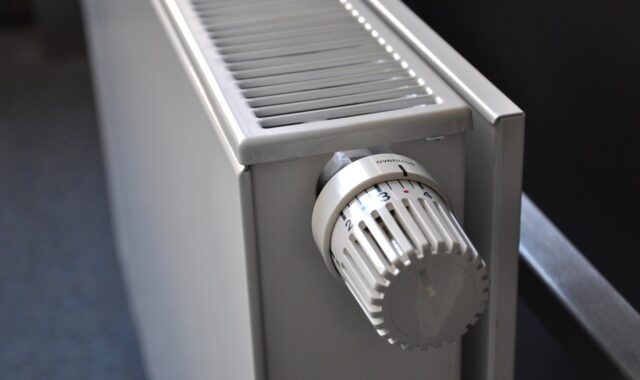
Climate and energy devices deserve separate attention. ENERGY STAR describes a smart thermostat as a Wi-Fi enabled device that automatically adjusts heating and cooling settings for performance. ENERGY STAR-certified smart thermostats are independently certified based on actual field data to deliver energy savings, but savings still depend on HVAC compatibility, schedule behavior, insulation, climate, and user settings. Smart plugs, load monitors, shades, and appliance controls can add visibility, but they should be used to manage real loads rather than simply adding more standby devices.
Interoperability is now a buying criterion
The most important standards development for smart house devices remains Matter, the smart home interoperability standard developed through the Connectivity Standards Alliance. Matter is designed to let compatible products work across participating ecosystems more consistently. It does not erase every difference between brands, apps, or feature sets, but it can reduce one of the connected home’s long-running problems: devices locked into isolated platforms.
Timing matters because the standard is still expanding. The Connectivity Standards Alliance announced Matter 1.5 on November 20, 2025, adding support for cameras, closures such as shades and garage-related devices, soil sensors, and energy management improvements. On March 31, 2026, the Alliance released Matter 1.5.1, an incremental update focused especially on camera and doorbell improvements, including more efficient multi-stream video and audio delivery, expanded media format support, pan-tilt-zoom refinements, and enhancements for related chime and intercom device types. This does not mean every 2026 camera supports every Matter feature, but it shows where the standard is moving.
Thread is another key term for buyers, especially for small battery-powered devices. The official Matter site describes Thread as a wireless network technology designed for small, battery-powered devices that connects through a Thread border router. The Thread Group announced Thread 1.4 for implementation in 2024, emphasizing a more consistent single mesh network, better border router behavior, cloud connectivity paths, and improved reliability. In practice, buyers should check not only whether a sensor says Matter, but also whether the home has the right controller and Thread border router infrastructure.
Wi-Fi, Zigbee, Z-Wave, Bluetooth, and Ethernet are not disappearing. Wi-Fi remains common for cameras, displays, appliances, and devices that need more bandwidth or direct router access. Zigbee and Z-Wave still support many installed lighting, sensor, and hub systems. Ethernet is still the most stable option for fixed infrastructure where wiring is practical. A practical rule is to avoid buying by protocol name alone. Buy by the job the device must perform, the ecosystem it must join, and the update support the manufacturer can maintain.
Security and privacy are part of product quality
Smart homes expand the number of networked endpoints inside a private space. That changes the meaning of product quality. A device with a good sensor but weak account protection, unclear update support, or poor default settings can become a household risk. NIST’s September 20, 2022 publication NISTIR 8425 identifies cybersecurity capabilities commonly needed for consumer IoT products and frames those capabilities around the whole product, not only the physical device. That matters because many smart products depend on a mobile app, cloud service, account system, and firmware update process.
The FCC’s Cyber Trust Mark program is another signal to watch. In its March 14, 2024 Report and Order, the FCC created a voluntary cybersecurity labeling program for wireless consumer Internet of Things products. The program is intended to help shoppers identify products that meet baseline cybersecurity criteria connected to NIST guidance. Because the program is voluntary and product availability can vary, it should be used as one purchasing signal rather than a substitute for checking the manufacturer’s update policy, account security, and data practices. See also: BUYING GUIDES.
NIST’s 2025 research on smart home users also reinforces that privacy concerns differ by category. In a survey of 401 U.S. smart home users across voice assistants, thermostats, security devices, sensors, and lighting, participants viewed some device categories as more problematic than others. That finding matches common sense. A voice assistant, indoor camera, smart lock, and water sensor do not create the same privacy profile. A good setup applies different controls to different devices: strong passwords and multifactor authentication for accounts, separate guest access where available, privacy zones for cameras, and routine software updates for everything connected.
A practical selection matrix for smart house devices
| Device category | Main value | What to check before buying |
|---|---|---|
| Smart speaker or display | Voice control, routines, household interface | Matter controller support, privacy controls, household account management |
| Smart thermostat | Comfort scheduling and energy management | HVAC compatibility, ENERGY STAR certification, remote access, utility program support |
| Smart lock | Access control and temporary entry | Physical key option, battery behavior, audit logs, account security, local control options |
| Video doorbell or camera | Entry awareness and event recording | Storage model, subscription limits, encryption, privacy zones, bandwidth needs |
| Motion, contact, leak, and temperature sensors | Automation triggers and early warnings | Battery life, Thread or hub support, alert reliability, placement requirements |
| Smart lighting and switches | Convenience, scenes, occupancy routines | Neutral wire requirements, dimmer compatibility, manual control, local behavior if internet fails |
| Smart plugs and energy monitors | Load control and usage visibility | Rated amperage, appliance safety, energy reporting accuracy, automation safeguards |
This matrix is more useful than a generic shopping list because it forces a home-by-home decision. A renter may get more value from plugs, bulbs, sensors, and a portable hub. A homeowner may prioritize hardwired switches, thermostats, outdoor cameras, and leak shutoff. A household caring for older adults may value sensors, stove monitoring, fall-related alerts, and simple interfaces more than decorative scenes. The right system starts with the household’s risks and routines.
How to build without creating unnecessary complexity
Start with the network. Many device problems blamed on a brand are actually weak Wi-Fi, poor router placement, crowded 2.4 GHz channels, or missing Thread border router coverage. Cameras and displays need stronger connectivity than a door sensor. Battery sensors need mesh reliability and careful placement. If a device controls security, water, heat, or access, test it under normal failure conditions: internet outage, power loss, low battery, app logout, and manual override.
Second, avoid automating before observing. A smart thermostat should learn from real occupancy patterns. Lighting automations should match how people move through the home at night. A smart lock should support guests, deliveries, and emergency entry without making daily access slower. Automations that surprise people are usually disabled. The most durable routines are usually the quiet ones: turn off forgotten lights, lower HVAC demand when the home is empty, alert on leaks, lock doors at night, and make entrances visible after motion.
Third, separate must-work functions from nice-to-have scenes. A leak alert, smoke or CO alert, lock status, and thermostat freeze protection deserve more careful setup than color lighting or music routines. For critical functions, favor products with clear fallback behavior, replaceable batteries or power planning, visible status indicators, and support documentation. A connected home should still behave like a home when the cloud is slow, an app changes, or a phone is not nearby.
Frequently asked questions
Are smart house devices worth buying in 2026?
They can be worth buying when they address a specific routine or risk. The strongest use cases are energy scheduling, leak detection, entry awareness, lighting automation, access control, and simple household alerts. They are less worthwhile when purchased only for novelty or when every device requires a separate app with unclear support.
Do I need Matter for every new device?
No. Matter is useful when cross-platform compatibility is important, especially for households using more than one ecosystem. However, some cameras, appliances, security systems, and legacy devices may still offer better features through their own platform. The better question is whether the device works with the controller, network, and automation plan you intend to use.
What should be the first smart home purchase?
For many homes, the first purchase should be a controller or platform decision, followed by one high-value device category such as a thermostat, smart lock, leak sensor, or lighting control. Starting with a practical problem prevents the system from becoming a collection of disconnected gadgets.
How can I keep smart devices more secure?
Use unique passwords, enable multifactor authentication where available, install updates, remove devices you no longer use, review camera and microphone settings, and buy from manufacturers that publish support and security information. For security-sensitive products, look for clear update policies and, where available, credible cybersecurity labels or certifications.
Will smart house devices save energy automatically?
Not automatically in every home. ENERGY STAR-certified smart thermostats are certified using field data, and good scheduling can reduce wasted heating and cooling. But savings depend on HVAC compatibility, climate, insulation, occupancy, and settings. Energy-focused devices work best when paired with realistic schedules and regular review of usage data.