How to choose home automation devices for a reliable smart home
What home automation devices should do first
Home automation devices should make everyday household tasks easier, safer or more efficient without pushing every decision into an app. The most dependable systems usually begin with a short list of core components: a controller or hub, sensors, lighting controls, climate devices, security devices and selected energy or appliance integrations.
The goal is not to connect everything at once. It is to build routines that keep working when a phone is not nearby, a cloud service is slow or a family member does not use the same app.

Demand has moved well beyond early adopters. Parks Associates reported that 45% of U.S. internet households have at least one smart home device, while 18% have six or more. That helps explain why reliability, interoperability and maintenance now matter as much as novelty. (parksassociates.com) For more connected hardware coverage, visit the SMART DEVICES section.
The main device categories in a home automation system
A practical smart home is built from device categories, not isolated gadgets. Each category should have a clear job, a fallback if automation fails and a useful reason to exchange information with other devices.
| Device category | What it automates | What to check before buying |
|---|---|---|
| Controllers and hubs | Scenes, routines, device management and multi-room coordination | Supported standards, local control options, user permissions and backup behavior |
| Sensors | Motion, door and window status, occupancy, temperature, humidity, water leaks and light levels | Battery life, placement range, protocol support and alert reliability |
| Lighting and plugs | Schedules, presence-based lighting, appliance switching and simple energy habits | Load rating, dimmer compatibility, physical controls and safe use with appliances |
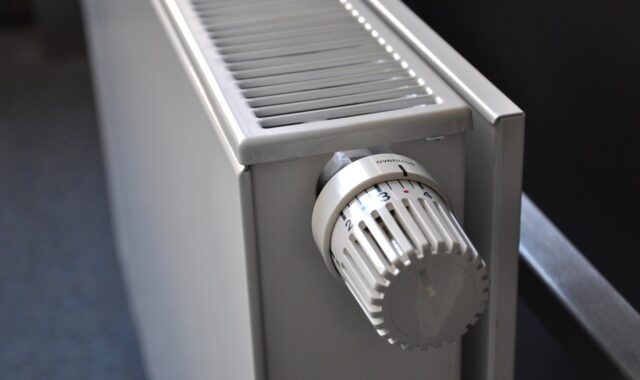
| Climate and energy devices | Heating, cooling, ventilation, energy monitoring and load shifting | HVAC compatibility, utility program limits, sensor support and manual override |
| Locks, cameras and alarms | Access control, event recording, presence alerts and security routines | Update policy, storage model, privacy settings, battery backup and emergency access |
| Appliances and outdoor devices | Cleaning, irrigation, garage access, leak prevention and appliance status | Repairability, app dependence, ecosystem support and physical safety |
Controllers and hubs
A controller is the coordination layer. It may be a smart speaker, a display, a dedicated hub, a home server or a router with smart home features. Its role is to keep device identity, scenes and automations consistent. Once a home has more than a handful of devices, the controller often matters more than any single bulb or sensor because it determines which products can work together.
Sensors
Sensors are the quiet foundation of automation. A motion sensor can turn on hallway lights at night. A door sensor can pause heating or send an alert. A leak sensor under a sink can catch a problem before it spreads. Placement matters more than quantity. A poorly placed motion sensor that triggers constantly will soon be disabled; a well-placed sensor becomes part of the background.
Lighting, plugs and switches
Smart bulbs are easy to install, but smart switches are often better for shared rooms because the wall control still works in the expected way. Smart plugs are useful for lamps, fans and low-risk loads, but they should not be treated as universal power controllers. Always check the plug rating and avoid using them with high-draw or safety-critical appliances unless the manufacturer explicitly supports that use.
Climate, security and appliances
Thermostats, locks, cameras, robot vacuums, garage controllers and appliances usually create the most visible lifestyle changes. They also carry higher consequences. A thermostat affects comfort and energy use. A lock controls entry. A camera collects sensitive data. These devices deserve more review than a decorative light strip.
Why interoperability matters more than brand count
Interoperability is the ability for devices from different brands to work together in predictable ways. It has become a central issue for home automation devices because many households already own a mix of phones, speakers, routers, TVs and apps. Buying only within one ecosystem can simplify setup, but it can also make future upgrades harder.
Matter is the most important recent attempt to reduce fragmentation in the smart home. The Connectivity Standards Alliance announced Matter 1.6 on June 17, 2026, describing it as a focused feature release for more intuitive setup, better multi-ecosystem experiences and context-driven control rather than a broad expansion into new device categories. (csa-iot.org) Earlier releases also show the direction of travel: Matter 1.4 in November 2024 emphasized enhanced multi-admin, home network infrastructure and energy management, while Matter 1.5 in November 2025 added support for categories including cameras, closures, soil sensors and more energy management capabilities. (csa-iot.org)
That does not mean every device with a Matter logo behaves in the same way. The standard improves common control, onboarding and compatibility, but manufacturers may still reserve advanced functions for their own apps. A sensible buying rule is to treat Matter as the baseline for core functions, then confirm whether the features you need are available in your preferred controller.
Wi-Fi, Thread, Zigbee and Bluetooth still matter
Standards sit above network technologies. Wi-Fi works well for cameras, speakers and devices that need higher bandwidth or direct router access. Thread is designed for low-power mesh devices such as sensors and small controls. Zigbee remains widely installed in existing homes. Bluetooth is often used for setup or close-range functions. A reliable home may use more than one of these technologies, but it should do so by design. Check which network each device requires before buying it.
Security and privacy should shape the shopping list
Every connected device becomes part of the home network, so security cannot be treated as a final setup step. NIST’s IoT cybersecurity baseline describes core device capabilities that help organizations identify whether connected products can support common cybersecurity controls, including device identification, configuration, data protection, logical access and software update capabilities. (csrc.nist.gov) For consumers, the practical takeaway is straightforward: prefer products with clear update policies, account protection, encryption, access controls and a way to remove or reset data before resale.
The FCC established a voluntary U.S. Cyber Trust Mark program for connected smart devices, building on NIST criteria to help consumers compare cybersecurity claims. (govinfo.gov) The label should not replace careful product review, but it gives U.S. shoppers another signal to consider as more eligible products move through testing and labeling.
The router is also part of the automation system. The FTC advises households to secure home Wi-Fi by changing default administrator credentials, using WPA3 Personal or WPA2 Personal encryption, keeping router software updated and considering a separate guest network for connected devices. (consumer.ftc.gov) Those steps are not glamorous, but they often matter more than adding another camera or sensor.
- Use unique passwords and multi-factor authentication where available.
- Turn on automatic updates for controllers, routers and devices when the vendor offers them.
- Review camera, microphone and location permissions after setup.
- Delete unused device accounts and remove old devices from apps.
- Check whether a device can still perform essential local functions if a cloud service is unavailable.
How to build automations that remain useful
Good automations are boring in the best way: they run at the right time and do not surprise people. Start with tasks that are repetitive, low-risk and easy to reverse. Common examples include turning on entry lights after sunset when a door opens, lowering heating or cooling when everyone leaves, sending a leak alert, or switching off nonessential lights at bedtime.
Use multiple conditions for routines that affect comfort or safety. A motion sensor alone may not be enough to decide whether a room is occupied. Combining motion, time of day, door state and manual switch activity can make the automation feel more natural. Avoid routines that trap people, such as lights that turn off too quickly or locks that engage before everyone understands the behavior. See also: BUYING GUIDES.
Design for manual control
Manual control is not a failure of automation. It is what keeps a smart home usable for guests, children, older relatives and anyone who does not want to open an app. Wall switches, keypads, physical lock options and clear labels reduce friction. If a routine cannot be overridden easily, it is probably too aggressive.
Document the setup
As homes add devices, the system becomes harder to remember. Keep a basic list of device names, rooms, batteries, apps, hubs, warranties and support dates. This list helps when moving homes, changing routers or troubleshooting a failed routine. It also prevents duplicate purchases.
Cost, energy and maintenance trade-offs
Some home automation devices can pay back through convenience, risk reduction or energy savings, but not every smart device should be judged by direct savings. Lighting controls may be mostly about comfort. Leak sensors may justify themselves by reducing damage risk. Cameras may add visibility but also require privacy decisions and, in some cases, subscriptions.
Smart thermostats have one of the clearer efficiency cases. ENERGY STAR says certified smart thermostats are independently certified based on actual field data and estimates average savings of about 8% of heating and cooling bills, or about $50 per year; it also notes that heating and cooling account for almost half of the average American household’s annual energy bill. (energystar.gov) Those figures are useful benchmarks, not guarantees for every home. Savings depend on climate, insulation, HVAC equipment, occupancy patterns and whether users accept automated temperature changes.
Maintenance also has a cost. Battery sensors need replacements. Cameras may require storage plans. Firmware updates can change features. Some products lose support earlier than expected. Before adding a device, ask who will maintain it, how often it needs attention and whether the home still works if it is removed.
A practical setup path for different homes
Renters should usually start with portable devices: smart plugs, bulbs, removable sensors, a thermostat only if permitted, and a controller that can move with them. Avoid hardwired changes unless the lease allows them.
Small homes and apartments benefit from simple presence and lighting routines, a few leak sensors and strong router settings. Large homes should plan network coverage first, then decide where mesh devices, hubs and wired controls are needed. A weak network can make even high-quality devices seem unreliable.
Family homes should prioritize shared usability. Choose switches over app-only controls in common areas, create separate user permissions and avoid automations that depend on one person’s phone. Homes with frequent guests or caregivers should keep essential tasks visible and physical.
The most resilient strategy is phased adoption. Add one category, confirm that it solves a real problem, then expand. A three-device system that everyone trusts is better than a thirty-device system that people constantly bypass.
Frequently asked questions
What are the most useful home automation devices to start with?
For most households, the strongest starting mix is a controller, a few smart switches or bulbs, a motion or door sensor, a leak sensor and possibly a smart thermostat. This combination covers convenience, safety and energy use without requiring a complex installation.
Do home automation devices need a hub?
Not always. Many Wi-Fi devices work without a dedicated hub, but a hub or controller can improve coordination, local routines and multi-device scenes. Thread and Zigbee devices usually require a compatible border router or hub.
Is Matter enough to guarantee compatibility?
No. Matter improves interoperability for supported device types and common functions, but it does not guarantee that every advanced feature will appear in every app. Check the exact device type, supported controller and feature list before buying.
Are smart home devices safe to use?
They can be used safely when buyers choose reputable products, keep software updated, secure the router, use strong account protection and limit unnecessary data access. The risk rises when devices have unclear support policies, weak passwords or excessive permissions.
How many devices should a smart home have?
There is no ideal number. A reliable smart home should have only as many devices as it can maintain and use well. Focus on routines that reduce daily friction, improve awareness or lower avoidable energy use rather than filling every room with connected hardware.