Lawn maintenance ideas for a healthier yard with smarter water use

What makes a lawn maintenance idea worth doing?
The best lawn maintenance ideas are not just cosmetic fixes. They help grass grow thicker, use water more efficiently, limit weed pressure, and make routine work easier to repeat. For most homeowners, the strongest starting points are mowing height, soil condition, irrigation timing, compaction, and seasonal timing. Products and smart devices can help, but they work best when they support basic turf principles rather than replace them.
A healthier lawn starts with measurement. Soil tests, rain gauges, mower height settings, and regular observation give you a clearer picture of what the yard actually needs. For more practical upkeep topics, see the site’s Maintenance tips archive.
Start with measurement before changing the lawn
Many lawn problems look alike from the sidewalk. Thin grass, weeds, brown patches, and slow recovery can come from low fertility, compacted soil, heavy shade, shallow watering, mowing too short, pests, disease, or normal summer dormancy. Before adding seed, fertilizer, herbicide, or connected devices, build a basic baseline.
A soil test is usually the highest-value first step because it shows whether the lawn needs nutrients or pH correction. University extension programs commonly recommend testing before fertilizing because guesswork can waste material and contribute to nutrient runoff. A soil test will not explain every issue, but it helps avoid a common mistake: treating every poor lawn as if it only needs more fertilizer.
Next, divide the lawn into zones. A front slope, shaded side yard, high-traffic play area, and sunny curb strip often need different care. Walk each zone and note sun exposure, drainage, weed types, bare spots, irrigation coverage, and concentrated foot traffic. This map also makes smart hardware more useful. A controller, sensor, or robotic mower can only perform well when its schedule and boundaries match actual site conditions.
- Use a rain gauge or catch cups to measure how much water sprinklers apply.
- Record the actual mower height instead of relying only on the deck number.
- Photograph the same problem areas once per month to track changes.
- Mark compacted areas where water pools or grass thins under traffic.
- Keep a simple calendar of mowing, watering, seeding, and fertilizer dates.
Mow for turf health, not just appearance
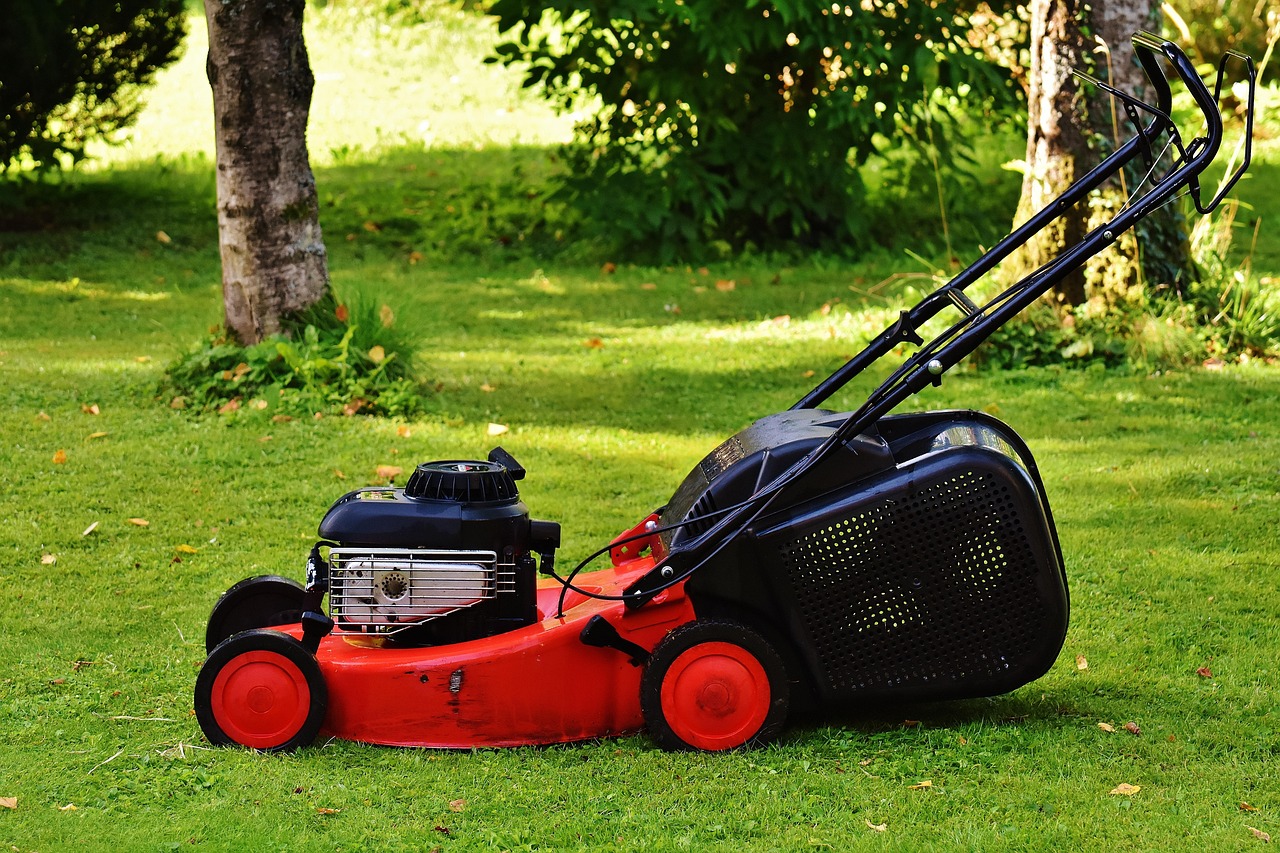
Mowing is usually the most repeated lawn task, so small changes add up quickly. University of Minnesota Extension advises maintaining many cool-season residential lawns at 3 inches or higher. Taller grass shades the soil, supports deeper roots, and helps turf compete with weeds. That does not mean every region or grass species should be cut the same way, but it does show why scalping a lawn for a short, tidy look often creates more stress than benefit.
The one-third rule is a practical way to reduce mowing shock: remove no more than about one-third of the grass blade in a single mowing. If the target height is 3 inches, mow before the grass gets much above 4.5 inches. During fast spring growth, that may mean mowing more often. During summer heat or drought, mowing less frequently and keeping the grass slightly taller can reduce stress.
Keep clippings working for the soil
Grass clippings are not automatically thatch. When the lawn is mowed regularly and clippings are small, they break down and return nutrients to the soil. University of Minnesota Extension notes that leaving decomposed clippings can contribute the equivalent of one fertilizer application over a year. Bagging may still make sense when grass is extremely tall, diseased, or covered with weed seed heads, but routine bagging removes organic material the lawn could reuse.
Make robotic mowing fit the grass, not the other way around
Robotic mowers can support lawn health because frequent light cuts are easier on turf than occasional heavy cuts. The limits matter, though. They need safe boundaries, suitable operating conditions, sharp blades, and an appropriate cutting height. A robotic mower should not become a reason to cut grass too low. If the device cannot maintain a suitable height for the grass type and season, adjust the schedule or use a conventional mower during those periods.
Blade sharpness matters for both robotic and traditional mowing. Dull blades tear leaf tissue, leaving a gray or ragged look and adding stress. A practical routine is to inspect blades monthly during active growth and after contact with sticks, stones, or edging material.
Water by need instead of by calendar
Watering is where many lawns waste the most resources. The U.S. EPA WaterSense program reports that residential outdoor water use across the United States accounts for nearly 8 billion gallons per day, mainly for landscape irrigation. That scale makes irrigation efficiency more than a small household issue. It also explains why smart controllers, moisture sensors, and better sprinkler layouts can provide real value when they are used carefully.
University of Maryland Extension describes actively growing grass as generally doing best with about 1 inch of water per week from rainfall or irrigation. Treat that as a starting point, not a universal rule. Sandy soils dry faster, clay soils absorb water slowly, slopes may run off, and shaded areas often need less frequent irrigation than full-sun areas. The goal is not to run sprinklers every day. The goal is to replace the water the lawn actually needs without causing runoff, fungal pressure, or shallow rooting.
Use a catch-cup audit before adjusting timers
Place several straight-sided cups across a sprinkler zone and run the system for a known period. If one cup fills much faster than another, the zone has uneven coverage. Increasing runtime may green up dry spots, but it can also overwater the rest of the area. Fixing nozzle alignment, water pressure, blocked heads, or spray pattern overlap often saves more water than changing the timer alone.
Let smart controllers handle weather adjustments
EPA WaterSense states that labeled irrigation controllers can reduce overwatering by applying water only when plants need it. The agency estimates that replacing a standard clock-based controller with a WaterSense labeled irrigation controller can save an average home up to 15,000 gallons of water annually. Weather-based controllers use weather data to adjust schedules, while soil moisture-based controllers respond to moisture readings in the root zone. Both approaches are more useful than a fixed clock timer when the system is installed, calibrated, and zoned correctly.
Use microirrigation for beds, not the whole lawn
Microirrigation is usually better suited to shrubs, trees, foundation plantings, and garden beds than broad turf areas. EPA WaterSense materials report that microirrigation can use 20 to 50 percent less water than conventional sprinkler systems in appropriate landscape uses. For a lawn, the better step is often to separate turf zones from planting-bed zones so each area receives the right delivery method.
Build density to reduce weed pressure
Weed control is often treated as a chemical decision, but the first defense is competitive turf. UC Statewide Integrated Pest Management explains that a dense, vigorous stand of turfgrass resists weed invasion better than thin, stressed turf. In practice, mowing height, correct watering, seed selection, traffic management, and soil condition are all part of weed management. See also: BUYING GUIDES.
Overseeding is most useful when the existing lawn is thin but still worth preserving. For cool-season grasses, late summer to early fall is often favored by extension programs because soil is warm, air temperatures begin to moderate, and young grass has time to establish before winter. Warm-season lawns follow different timing, often during active late spring or early summer growth. The key is to seed when the grass type can germinate and establish, not simply when a calendar promotion appears.
Core aeration is worth considering where soil is compacted, water runs off, or foot traffic has reduced rooting. Pulling cores creates channels for air, water, and seed-to-soil contact. It is not a yearly requirement for every lawn. If soil is loose, drainage is good, and grass is dense, aeration may provide little visible benefit. If compaction is clear, aeration before overseeding can help new grass establish more evenly.
Shade needs a realistic plan. If turf fails every year under dense trees or along a north-facing wall, the issue may not be maintenance effort. The site may simply be a poor fit for turf. In those areas, consider shade-tolerant seed, reducing foot traffic, pruning for light where appropriate, or replacing turf with mulch, ground covers, or planting beds.
A seasonal maintenance matrix for practical decisions
A useful lawn plan connects tasks to the grass growth cycle. Exact timing depends on climate, grass species, and local restrictions, but the decision logic is consistent: do growth-building tasks when grass can recover, reduce stress during heat or drought, and avoid applying products when the lawn cannot use them.
| Season or condition | Maintenance idea | Why it helps | Smart hardware angle |
|---|---|---|---|
| Early active growth | Check mower height, sharpen blades, test irrigation zones | Prevents early-season stress and catches equipment problems before peak demand | Update mower schedules and run sprinkler diagnostics |
| Before fertilizing | Use a soil test and review past problem areas | Targets nutrients instead of guessing | Store test dates and application reminders in a yard log |
| Hot or dry periods | Mow higher, water only as needed, pause nonessential treatments | Reduces heat and drought stress | Use weather-based or soil moisture-based irrigation control |
| Thin turf during establishment season | Overseed, improve seed-to-soil contact, protect from traffic | Increases density and reduces open space for weeds | Temporarily adjust mowing and watering schedules for germination |
| Compacted areas | Core aerate when the grass can recover | Improves air and water movement in the root zone | Mark repeat traffic zones for layout changes |
| Leaf drop | Mulch light leaves or remove heavy mats | Prevents smothering while returning organic matter when leaves are manageable | Use mowing frequency to mulch leaves before they form layers |
Where smart hardware helps and where it does not
Smart lawn hardware is most valuable when it improves consistency, measurement, or responsiveness. A smart irrigation controller can adjust watering after rain. A soil moisture sensor can prevent unnecessary cycles. A robotic mower can keep growth within a narrow range. A connected weather station can help compare rainfall, temperature, and irrigation need. These tools reduce manual decisions, but they do not diagnose every turf problem automatically.
The common mistake is using technology to automate a flawed routine. If sprinkler heads are misaligned, a smart controller may still water unevenly. If a mower is set too low, automation simply scalps the lawn more consistently. If seed is planted in deep shade with heavy traffic, reminders and sensors will not change the light level. Hardware should support observation, not replace it.
When choosing devices, focus on practical compatibility rather than novelty. Check whether the controller supports the number of irrigation zones you have, whether local watering restrictions can be programmed, whether sensors can be placed where they represent the root zone, and whether the mower can handle slopes, narrow passages, and boundary complexity. For many yards, a rain gauge, sharp blades, and a well-calibrated controller will outperform a larger collection of poorly configured gadgets.
Frequently asked questions
What is the easiest lawn maintenance idea to start with?
Raise the mowing height to a suitable range for your grass type and stop removing too much blade at once. It costs nothing, reduces stress, and supports turf density. Pair that with sharp blades and leave fine clippings on the lawn when conditions allow.
How often should a lawn be watered?
For actively growing turf, about 1 inch per week from rain and irrigation is a common starting point, but soil, heat, shade, slope, and grass type change the need. Measure rainfall and sprinkler output before increasing runtime. If water runs off before soaking in, split irrigation into shorter cycles with soak time between them.
Are smart irrigation controllers worth it?
They can be worth it for lawns with automatic irrigation, especially where weather changes quickly or fixed timers often overwater. EPA WaterSense estimates meaningful annual water savings from labeled controllers, but performance depends on correct setup, working sprinkler heads, and realistic zone programming.
Does overseeding fix weeds?
Overseeding does not kill existing weeds, but it can help reduce future weed pressure by filling thin areas with desirable grass. For best results, address the reason the lawn thinned in the first place, such as low mowing, poor irrigation coverage, compaction, shade, or weak soil fertility.
Should every lawn be aerated every year?
No. Aeration is most useful for compacted soil, high-traffic areas, poor infiltration, or lawns being overseeded. If the lawn is already dense, drains well, and has no compaction symptoms, annual aeration may not be necessary.
The practical takeaway
The best lawn maintenance ideas are simple enough to repeat and specific enough to solve the right problem. Measure first, mow high enough, water by need, build turf density, and use smart hardware where it improves timing or consistency. A healthier lawn usually does not come from one dramatic treatment. It comes from small decisions that match the grass, the soil, the weather, and the way the yard is actually used.