Bottle design in 2026 is becoming a product system, not just packaging
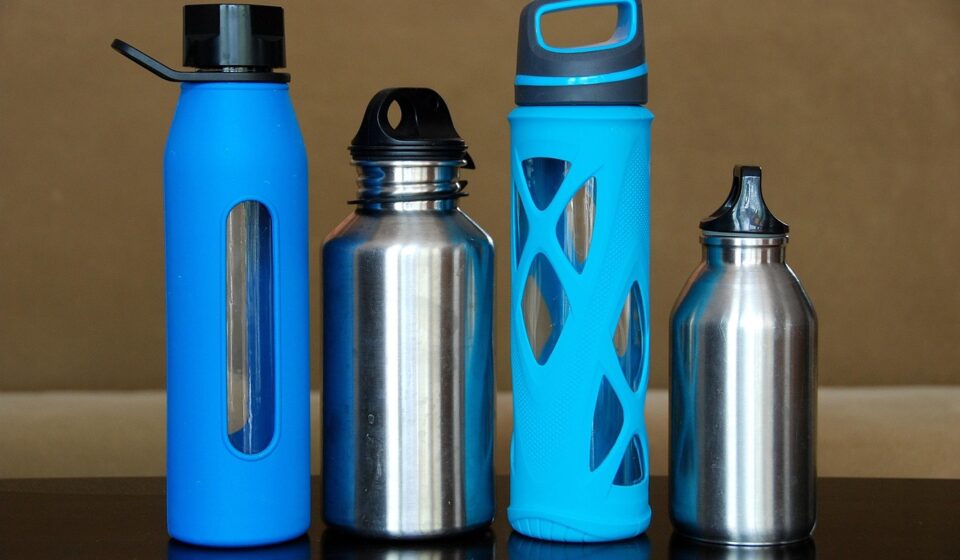
Why bottle design is now a system decision
Bottle design is no longer only about shape, shelf appeal, or how premium a container looks in a product photo. Across consumer goods, hydration products, cosmetics, health devices, and connected packaging, the bottle increasingly functions as a container, a user interface, a compliance object, and a recovery asset. A strong design brief now has to answer four questions together: how the bottle protects the contents, how people hold and use it, how digital information is accessed, and how the package returns to a material stream or reuse system after use.
This shift matters for teams working in product design because many of the most expensive decisions are made early. Neck finish, closure type, label area, wall thickness, resin choice, refill strategy, and data carrier placement can be difficult or costly to change after tooling, compliance review, or retailer onboarding. A bottle that appears simple on the outside may rely on a complex set of assumptions about manufacturing, logistics, food contact, labeling, and end-of-life handling.
The practical conclusion is straightforward: modern bottle design should be treated as a system architecture problem. Visual identity still matters, but it should be developed alongside usability, recyclability, connected-packaging readiness, and the realities of the sales or reuse channel.
Start with the use case before choosing the form
Many bottle projects start with mood boards, silhouettes, or competitor references. These tools are useful, but they should come after the use case is defined. A bottle for carbonated beverages, a refillable smart hydration product, a personal-care concentrate, and a home-cleaning refill cartridge face different pressure, dosing, storage, transport, and cleaning requirements.
Define the product and user context
The first design layer is functional containment. Teams should document the product’s viscosity, temperature range, carbonation or pressure profile, light sensitivity, chemical compatibility, shelf-life expectations, and whether the contents are food, beverage, cosmetic, supplement, medical-adjacent, or non-food. That classification affects material selection, cap liner decisions, tamper evidence, labeling, and regulatory review.
The second layer is human use. A bottle intended for daily carrying needs grip geometry, drop resistance, one-handed opening, leak prevention, and cleanability. A bottle used in a kitchen or bathroom may need stable standing, wet-hand handling, clear dosage cues, and compatibility with refill behavior. A bottle used with electronics, sensors, or smart caps also needs protection against moisture ingress, impact, battery access, charging, cleaning cycles, and radio-frequency constraints.
Separate primary design goals from secondary preferences
A useful brief separates non-negotiable requirements from preferences. Non-negotiables may include food-contact suitability, leak performance, pressure resistance, minimum fill volume, child resistance where applicable, or compatibility with an existing filling line. Preferences may include a softer shoulder, a taller profile, a larger brand panel, or a more premium surface finish. When these items are treated as equal, aesthetic choices can unintentionally weaken manufacturability, usability, or recovery.
Material and structure choices affect both feel and recovery
Material selection is one of the most visible and consequential parts of bottle design. PET, HDPE, PP, glass, stainless steel, aluminum, and multilayer structures each solve different problems. No material is automatically sustainable or appropriate in every use case. Weight, breakage risk, barrier performance, local collection systems, recycled-content availability, washing requirements, and transport distance can all change the outcome.
International standards such as ISO 18602 and ISO 18604 provide useful reference points for packaging optimization and material recycling. In practical terms, designers should not simply remove material until a bottle feels flimsy, nor should they add weight to create a premium cue without showing that the extra material improves performance, reuse life, or user value. Optimization means matching material quantity to the required function.
PET bottle design needs attention to color, labels, and adhesives
For PET beverage and personal-care bottles, recyclability often depends on details that are easy to overlook. European PET Bottle Platform and RecyClass guidance both emphasize compatible materials, labels, sleeves, inks, and adhesives. Clear or light-blue transparent PET is generally more compatible with high-value bottle-to-bottle recycling than opaque or heavily colored formats. Large full-body sleeves, metallic effects, non-compatible label materials, and adhesives that do not release during washing can reduce recovery quality or interfere with sorting.
This does not mean every brand has to use the same clear bottle. It does mean design teams should test visual concepts against recycling guidance before approving artwork. A premium opaque bottle, a shrink sleeve, or a complex decorative structure may still be chosen for business reasons, but the trade-off should be explicit rather than discovered after launch.
Reusable bottles need a different design logic
Reusable bottle design is not just a heavier version of single-use design. The Ellen MacArthur Foundation and UNEP have both emphasized that reuse works only when the product is part of a functioning system. That system can include refill at home, refill on the go, return from consumer to retailer, professional washing, reverse logistics, deposit handling, and inspection.
For a reusable bottle, durability is necessary but not sufficient. Designers also need to consider how easily the bottle can be cleaned, whether the mouth opening allows proper washing, whether surfaces trap residue, how many components must be separated, whether users can replace worn seals, and how the bottle shows age without looking unsanitary. In a connected hardware context, electronics must not make the bottle difficult to wash, unsafe to reuse, or impossible to repair.
Connected packaging turns the bottle into an interface
The information layer is becoming a major part of bottle design. QR codes, GS1 Digital Link, NFC tags, RFID labels, digital watermarks, and serialized markings can connect a physical bottle to instructions, authentication, product data, sustainability information, refill records, loyalty features, or supply-chain events. For smart hardware brands, this turns the bottle from a static object into a service touchpoint.
GS1’s Sunrise 2027 initiative is especially relevant for retail packaging. The industry goal is for retail point-of-sale systems to be capable of scanning and processing 2D barcodes by the end of 2027, alongside existing linear barcodes during the transition. GS1 Digital Link can allow a single code to support checkout identification and access to web-based product information, depending on implementation. For bottle designers, this affects label hierarchy, code placement, print quality, surface curvature, scannability, and how much physical label space is needed for mandatory and optional information.
Digital features must not be treated as decoration
A QR code or NFC tag is not a traceability system by itself. The value comes from the data model, production records, authentication logic, landing page governance, and user experience behind the mark. If a code leads only to a generic marketing page, it adds little functional value. If it provides batch-specific instructions, refill guidance, allergen or ingredient updates, recycling instructions, warranty registration, or service history, it can become a meaningful part of the product experience. See also: BUYING GUIDES.
Placement matters. Codes on curved bottles can distort. Glossy labels can reflect light. Small codes can fail on textured surfaces. A code placed where the user’s hand naturally wraps may wear off or be difficult to scan. Designers should prototype scannability on real materials, at real curvature, with expected print processes, rather than relying only on flat digital artwork.
Compliance checkpoints should be built into the design timeline
Regulation is becoming more design-specific. In the United States, the FDA framework for food-contact substances makes the manufacturer responsible for ensuring that food-contact materials comply with applicable authorizations and conditions of use. This is particularly important for caps, liners, coatings, colorants, recycled-content materials, adhesives, and components that may contact food or beverage directly or indirectly.
In the European Union, the Packaging and Packaging Waste Regulation entered into force on February 11, 2025 and began applying on a phased basis from August 12, 2026. The European Commission describes the regulation as covering the packaging life cycle, including design, waste handling, recyclability, recycled plastic content, and reuse-related measures. Major requirements such as economically viable recyclability for all packaging on the EU market and mandatory recycled-content rules for plastic packaging are scheduled for 2030, with further targets later.
For design teams, the important point is timing. A bottle launched in 2026 may still be sold, redesigned, refilled, or regionally adapted during the run-up to 2030 rules. If the first design ignores recyclability, labeling, recycled-content planning, or reuse feasibility, the brand may face redesign costs sooner than expected.
A practical compliance review should cover five areas
- Food-contact and product safety: Confirm whether every contact material, coating, liner, pigment, adhesive, and recycled-content source is suitable for the product and market.
- Label and claims control: Avoid broad environmental claims unless they can be substantiated in the selling region and supported by the actual package design.
- Recyclability or reuse route: Identify the intended end-of-life pathway and test whether design details support that pathway.
- Data carrier governance: Define who owns product data, how updates are controlled, and what happens if a linked page changes after packaging is printed.
- Market-specific obligations: Check extended producer responsibility, deposit, labeling, recycled-content, and retailer requirements before tooling is locked.
A bottle design framework for product teams
A structured framework helps teams avoid designing only for appearance. The table below summarizes the main decisions that should be reviewed before final concept approval.
| Design area | Key question | Risk if ignored |
|---|---|---|
| Use scenario | Where, how often, and by whom will the bottle be used? | The form may look attractive but fail in daily handling, cleaning, or transport. |
| Material | Does the material match product compatibility, weight, durability, and recovery goals? | The bottle may be overbuilt, underperforming, hard to recycle, or unsuitable for contact use. |
| Closure | Does the cap support dosing, sealing, tamper evidence, refill, and user comfort? | Leaks, poor usability, or excess component complexity can appear late in development. |
| Decoration | Are labels, inks, sleeves, and adhesives compatible with the intended recovery route? | A strong visual design may reduce recyclability or sorting performance. |
| Digital layer | Does the code, NFC tag, or data carrier serve a real user or supply-chain function? | Connected packaging becomes a cosmetic feature rather than a useful interface. |
| Regulatory path | Which markets, product categories, and compliance obligations apply? | Redesign may be required after tooling, artwork approval, or retailer submission. |
For smart hardware and connected products, teams should also decide whether intelligence belongs in the bottle body, the cap, the label, or the surrounding service. A smart cap may be easier to reuse across bottle bodies, but it adds sealing, washing, battery, and durability challenges. A printed code is cheaper and more scalable, but it depends on data governance and user scanning behavior. An NFC tag can create a smoother interaction, but it adds cost and may complicate recycling if it is not designed for separation or compatibility.
The strongest approach is often modular. Keep the bottle body as simple and recoverable as possible, place replaceable or higher-value components where they can be maintained, and use digital identifiers to connect the physical product to changing information. This gives the design room to adapt as regulations, retail systems, and reuse models evolve.
Frequently asked questions
What makes a bottle design successful?
A successful bottle design protects the product, supports intuitive use, fits the production and filling process, communicates clearly, and has a realistic reuse or recycling pathway. Visual differentiation is important, but it should not undermine safety, handling, compliance, or recovery.
How does smart packaging change bottle design?
Smart packaging adds an information layer to the bottle. Designers must consider scannability, code placement, NFC or RFID integration, data accuracy, landing-page maintenance, and whether the digital feature helps users, retailers, recyclers, or service teams. The mark on the bottle is only useful if the system behind it is reliable.
Is a reusable bottle always more sustainable than a single-use bottle?
Not automatically. Reuse depends on the number of actual use cycles, washing method, transport distance, loss rate, material durability, and user behavior. A reusable bottle should be designed as part of a refill or return system, not simply made thicker.
Why do labels and adhesives matter in bottle recycling?
Labels, sleeves, inks, and adhesives can affect sorting, washing, and the quality of recovered material. In PET bottle recycling, for example, incompatible full-body sleeves or adhesives that do not release properly can reduce the value of the recycled stream.
When should compliance be reviewed in a bottle project?
Compliance should be reviewed before material selection and tooling, then again before artwork approval and market launch. Food-contact suitability, labeling rules, recyclability claims, extended producer responsibility, and connected-packaging data requirements can all influence the final design.