Wok buying guide for material, size, stove fit, and care
Quick answer for choosing a wok
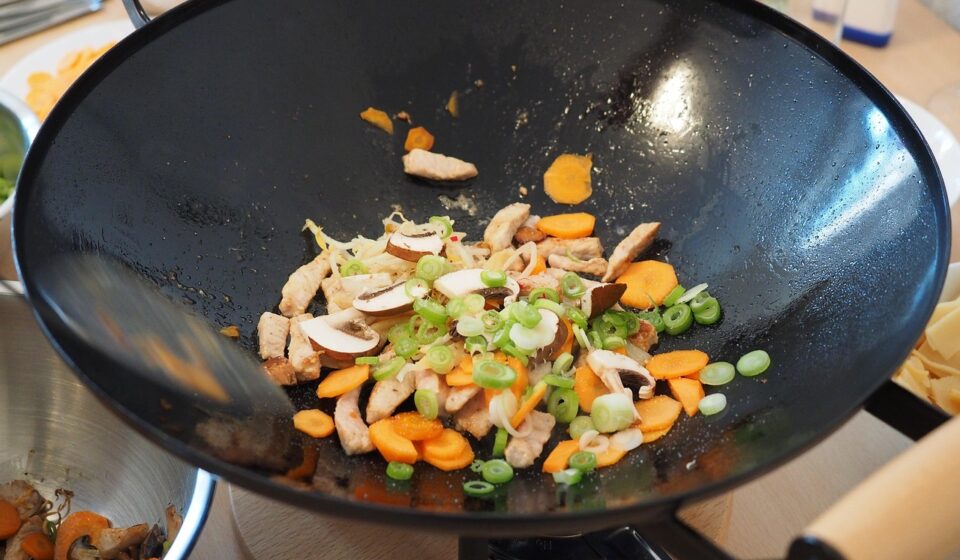
A practical wok buying guide should start with the stove, not the brand. For many home cooks in the United States, the most versatile choice is a 14-inch flat-bottom carbon steel wok, ideally around 1.5 to 2 millimeters thick, with a main handle and a helper handle. Carbon steel heats quickly, responds well when you raise or lower the flame, develops a seasoned cooking surface, and remains light enough to tilt or toss. A round-bottom wok can perform very well on a powerful gas burner or outdoor wok burner, but it is often awkward on flat electric and induction cooktops. Nonstick woks are convenient for lower-heat cooking, but they are not the best match for the very high heat that defines much of wok cooking.
This guide focuses on the buying decisions that affect day-to-day cooking performance: stove fit, metal, diameter, thickness, handle style, seasoning, and accessories. For more practical purchase explainers, visit our Buying Guides section.
Match the wok to your stove first
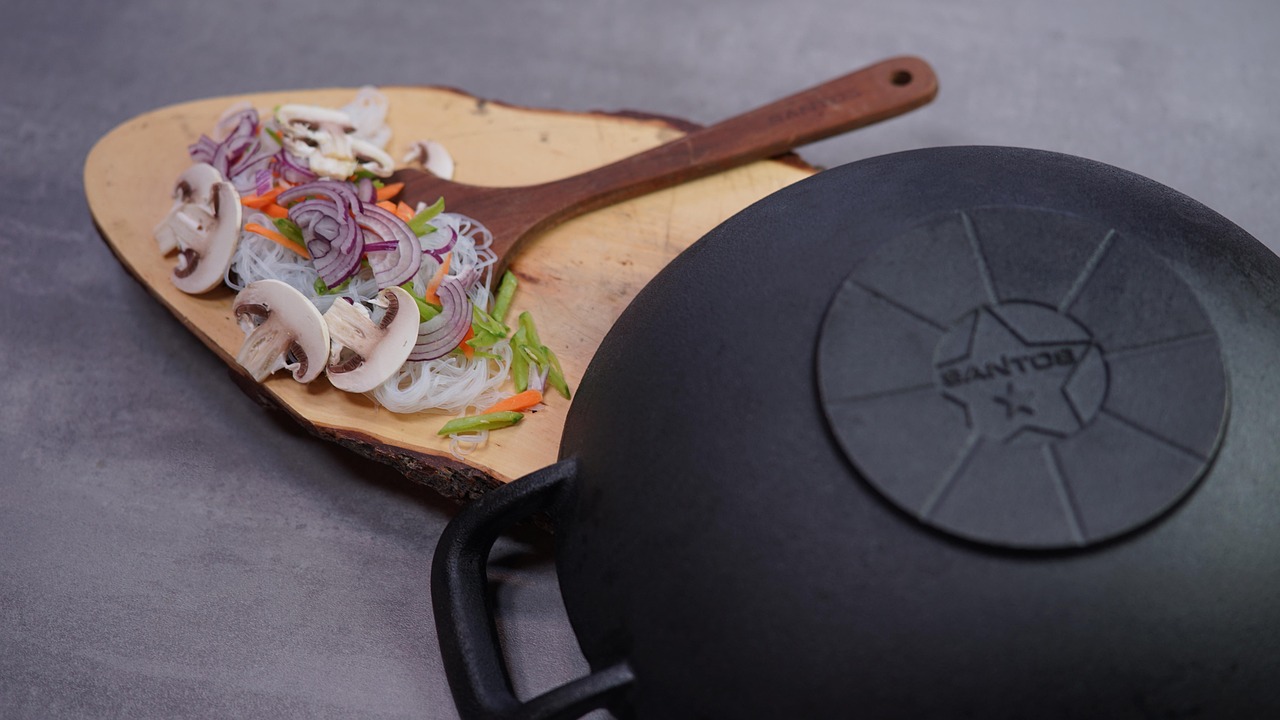
The bottom shape matters because a wok is not simply a deep pan. Its curved sides create heat zones: the center takes the strongest heat, while the sloped walls let you move food away from direct heat without removing it from the pan. If the wok cannot sit securely and transfer heat well on your cooktop, the material and brand become secondary.
| Stove type | Most practical wok shape | Why it matters |
|---|---|---|
| Gas range | Flat-bottom carbon steel for most homes; round-bottom only with a stable ring or wok grate | Gas flames can reach the sides, but many home burners are not shaped for a round wok. |
| Electric coil | Flat-bottom wok | The flat base keeps direct contact with the heating element. |
| Glass radiant electric | Flat, smooth-bottom wok | A stable base reduces rocking and improves heat transfer. |
| Induction | Flat-bottom magnetic wok | Induction needs magnetic cookware and enough flat contact area to heat properly. |
| Outdoor wok burner | Round-bottom carbon steel | A high-output burner can cradle the wok and heat the curved base effectively. |
Induction buyers need to check more than the word “magnetic.” A pan can be made from magnetic steel and still perform poorly if only a small section touches the glass. Appliance makers commonly advise using cookware with a flat, smooth, magnetic base. When shopping online, check whether the listing says induction compatible and look for the flat base diameter, not only the top rim diameter.
Choose material by heat response and maintenance
Carbon steel is the default recommendation for good reason. It is lighter than cast iron, usually less expensive than multi-ply stainless steel, and better suited to high-heat stir-frying than nonstick coatings. It does require seasoning, drying, and occasional oiling, but those tasks are also what allow the surface to improve with use.
| Material | Strengths | Trade-offs | Good fit for |
|---|---|---|---|
| Carbon steel | Fast heating, responsive, durable, develops seasoning | Can rust if left wet; needs seasoning | Most stir-fry, searing, steaming, and everyday wok cooking |
| Cast iron | Strong heat retention, naturally seasonable | Heavy; slower to respond; can be tiring to lift | Cooks who value heat storage over agility |
| Stainless steel or clad stainless | Low maintenance, no seasoning required | Food may stick more; often expensive; less traditional wok response | Simmering, steaming, saucing, and users who dislike seasoning |
| Nonstick-coated metal | Easy release and cleanup | Not ideal for high-heat wok technique; coating can wear | Low-to-medium heat cooking and delicate foods |
| Aluminum | Lightweight and quick to heat | Usually not induction compatible unless built with a magnetic base; may not suit very high heat | Casual low-heat cooking, depending on construction |
For a first serious wok, uncoated carbon steel is usually the most flexible choice. Read the product description carefully. Some pans are marketed with terms such as “carbon steel” while also using a nonstick coating. That is not automatically a problem, but it changes how the wok should be heated, cleaned, and maintained.
Pick the right size, thickness, and shape
A 14-inch wok is popular because it gives ingredients room to move without becoming unmanageable on a home stove. A 12-inch wok can work for one or two people, but it crowds quickly with vegetables, noodles, or fried rice. A 16-inch wok offers more surface area, yet it may overwhelm a standard burner and can be heavy when loaded with food.
- 12 inches: compact, easier to store, suitable for small portions, but easy to overcrowd.
- 14 inches: the most balanced home size for many households.
- 16 inches: useful for larger batches if your burner is wide and powerful enough.
Thickness also affects performance. Very thin carbon steel heats quickly but can warp, especially on powerful burners or induction. Very thick steel stores heat, but it becomes heavier and less responsive. Many experienced cooking guides point to the middle range, roughly 1.5 to 2 millimeters, as a practical compromise for home use.
Look closely at the transition from the flat base to the walls. A wok with a very wide, skillet-like flat bottom may lose some of the tossing action and heat-zone advantage. A base that is too small may wobble or fail to heat well on induction. For most home ranges, the most useful design is a flat base wide enough to sit securely, paired with gently sloping sides.
Decide which handle style fits your cooking
Woks usually come in two handle styles. A northern-style wok, often called a pow wok, has one long handle and usually a smaller helper handle on the opposite side. A Cantonese-style wok has two short loop handles. Neither style is universally better; the right choice depends on how you cook, lift, pour, and store the pan.
A long handle makes it easier to tilt, shake, and pour food from the wok. It suits cooks who want the classic motion of moving ingredients through hot oil and steam. A helper handle makes lifting safer when the wok is full. Two loop handles are compact and fit well in ovens, cabinets, and restaurant-style workstations, but they require mitts or towels and are less convenient for tossing.
Handle material is another practical detail. Wood stays cooler but may limit oven seasoning and can loosen over time. Metal handles tolerate heat and oven use better, but they get hot. Removable handles can help with oven seasoning, though the attachment should feel sturdy. If you use induction or a glass cooktop, prioritize control and stability over dramatic tossing; sliding or banging the pan can damage the cooking surface.
Understand seasoning, care, and safety limits
Uncoated carbon steel and cast iron need seasoning. Seasoning is a thin layer formed when oil is heated onto the metal surface. It improves release, helps resist rust, and darkens with repeated cooking. A new carbon steel wok often arrives with a protective factory coating that must be washed off according to the manufacturer’s instructions before the first seasoning.
A simple care routine is enough for most carbon steel woks: See also: CONNECTIVITY.
- Wash the new wok to remove shipping or factory residue.
- Heat it until fully dry before applying a thin layer of oil.
- Season with a thin coat, not a puddle, of high-smoke-point oil.
- After cooking, wash gently, dry over heat, and wipe with a light film of oil if needed.
- Remove rust before cooking if the pan has been stored wet.
Nonstick woks require different rules and should not be treated like carbon steel. Avoid empty preheating over high heat, metal utensils unless the maker allows them, abrasive scrubbers, and oven temperatures beyond the manufacturer’s rating. Public cookware guidance from sources such as Consumer Reports has also noted consumer concern around PFAS chemicals in traditional nonstick coatings, while U.S. food-safety regulators distinguish between different PFAS uses and how coatings are bound to cookware. For a buying decision, the practical point is straightforward: if you want intense high-heat stir-frying, carbon steel is usually the more suitable tool; if you want easy cleanup at moderate heat, nonstick may be acceptable with careful use.
Buy the accessories that actually help
A wok does not need a large accessory kit, but a few pieces make cooking easier. A metal wok spatula with a curved edge helps scrape and turn food along the sloped sides. If you use a nonstick wok, choose wood, silicone, or another coating-safe utensil instead. A domed lid is useful for steaming, braising, and finishing vegetables. A bamboo steamer or metal steaming rack lets the wok double as a steamer.
- Worth buying: wok spatula, lid, steaming rack or bamboo steamer, oil-safe brush or towel for seasoning.
- Useful in specific cases: wok ring for a round-bottom wok on gas, outdoor burner for high-output cooking, infrared thermometer for learning heat control.
- Usually optional: oversized starter kits, decorative stands, and utensils that duplicate tools you already own.
If you choose a round-bottom wok, do not treat the wok ring as a minor detail. The ring must hold the wok securely and position it close enough to the heat. A ring that lifts the wok too high can make performance worse, even if the wok itself is well made.
A practical buying checklist
Before buying, compare the listing with the way you actually cook. A visually attractive wok can still be wrong for your burner, sink, cabinet, or cleaning routine.
- Stove compatibility: flat bottom for electric, radiant glass, and induction; round bottom only when your heat source supports it.
- Material: choose uncoated carbon steel for high-heat versatility; choose nonstick only if easy release matters more than high-heat technique.
- Size: 14 inches is the balanced default; go smaller for tight storage and larger only with enough burner power.
- Thickness: avoid flimsy metal that warps easily; avoid overly heavy pans if you plan to toss food.
- Base: confirm the flat base is stable and, for induction, magnetic.
- Handles: long handle for control, loop handles for compact lifting, helper handle for safety.
- Care needs: buy carbon steel only if you are willing to season, dry, and oil it.
- Return policy: useful when you need to test stability on a particular cooktop.
The most common mistake is buying a wok as if it were only a large pan. A plain, well-shaped carbon steel wok that matches your burner is usually a better purchase than a premium-looking pan with the wrong base, coating, or weight.
Frequently asked questions
Is carbon steel or cast iron better for a wok?
Carbon steel is usually better for a general-purpose wok because it is lighter and more responsive. Cast iron can hold heat well, but its weight makes tossing and quick movement harder. If you mainly sear and do not lift the pan often, cast iron can work; for classic stir-frying, carbon steel is the more practical choice.
Should I buy a flat-bottom or round-bottom wok?
Choose a flat-bottom wok for most indoor home stoves, especially electric, glass radiant, and induction. Choose a round-bottom wok only if you have a suitable gas setup, a stable wok ring, a dedicated wok grate, or an outdoor burner designed for that shape.
Is a nonstick wok a bad choice?
Not always. A nonstick wok can be convenient for low-to-medium heat cooking, eggs, or saucy dishes. It is a poor match for very high heat, aggressive metal utensils, and traditional seasoning. If your goal is durable high-heat stir-frying, uncoated carbon steel is usually the better buy.
What size wok should I buy for a family?
A 14-inch wok is the most practical starting point for many families. It gives enough room to stir and move ingredients without becoming as heavy or burner-dependent as a 16-inch wok. For large meals, cooking in two smaller batches often gives better texture than overcrowding one big batch.
How much should I spend on a first wok?
You do not need a luxury pan to start. A simple, well-shaped carbon steel wok can be a better purchase than an expensive pan with the wrong bottom shape or coating. Spend enough to get stable construction, suitable thickness, and reliable handles, then invest time in learning heat control and care.