What to look for when buying binoculars for clearer, steadier views
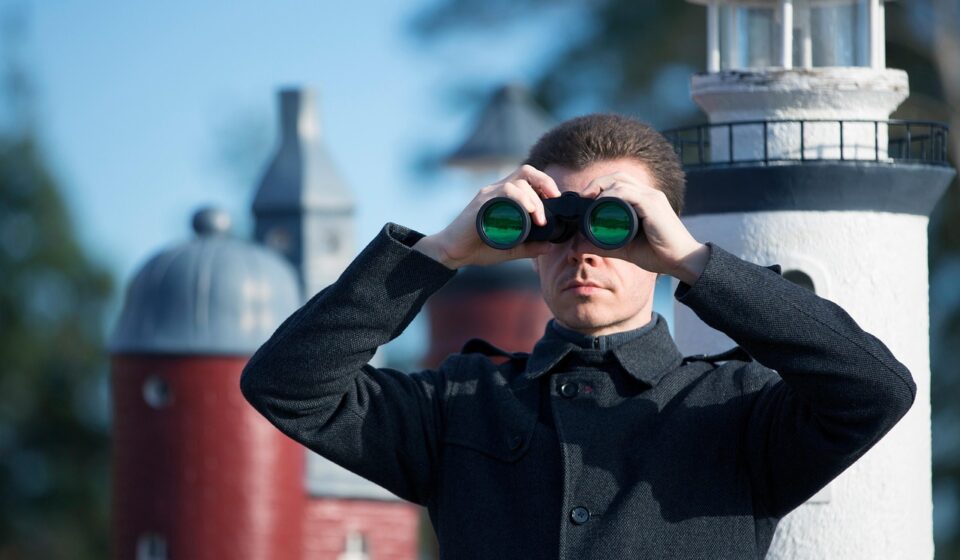
Start with the view you need, not the biggest number
If you are deciding what to look for when buying binoculars, start with the situation in which you will use them: steadiness, brightness, field of view, eye comfort, and build quality. For many casual nature, travel, and backyard users, an 8×32 or 8×42 is often a practical starting point because it balances magnification, brightness, weight, and viewing width. A 10×42 can make sense for open landscapes or distant wildlife, while compact 8×25 binoculars put portability ahead of low-light performance. Manufacturer education pages from Nikon and retailer guides from REI describe the same basic trade-off: higher magnification brings subjects closer, but it can narrow the view and make hand shake more noticeable. (rei.com)
The best choice is not necessarily the most powerful pair on the shelf. It is the pair you can hold steady, focus quickly, carry comfortably, and use in the light and weather conditions you expect.

Understand the two headline numbers
Most binoculars are labeled with two numbers, such as 8×42, 10×32, or 7×50. The first number is magnification. An 8x binocular makes the subject appear eight times closer than it appears to the unaided eye. The second number is the objective lens diameter in millimeters. The objective lenses are the larger front lenses, and their size affects how much light enters the optical system.
These two numbers influence almost every other buying decision. More magnification can help with distant subjects, but it also tends to reduce field of view and amplify hand movement. Larger objective lenses can improve low-light usefulness, but they add size and weight. That is why a compact 10×25 may look appealing on paper but can feel dimmer and shakier than an 8×42 in real outdoor use.
| Format | What it usually favors | Main compromise |
|---|---|---|
| 8×25 | Travel, pocket carry, daytime events | Smaller exit pupil and weaker low-light comfort |
| 8×32 | Hiking, travel, general wildlife | Less light gathering than 42 mm models |
| 8×42 | Birding, backyard viewing, all-around outdoor use | Larger and heavier than compact models |
| 10×42 | Open country, shorelines, distant wildlife | Narrower view and more visible shake than 8x |
| 7×50 | Boating, low-light scanning, steady handheld viewing | Bulky for hiking and casual carry |
Check brightness with exit pupil, not lens size alone
Objective lens size matters, but it is not the whole brightness story. A useful shortcut is exit pupil, calculated by dividing objective lens diameter by magnification. An 8×42 binocular has a 5.25 mm exit pupil. A 10×42 has a 4.2 mm exit pupil. A 10×25 has only a 2.5 mm exit pupil. Nikon’s optics guide uses this same formula and notes that a larger exit pupil is especially helpful at dawn, dusk, and for astronomy. (imaging.nikon.com)
For bright midday use, a smaller exit pupil may be acceptable because your eye pupil is already constricted. In shade, twilight, dense woods, or night-sky viewing, a larger exit pupil can make alignment easier and the image feel more relaxed. This is one reason 8×42 remains a practical recommendation for many first-time buyers: it gives useful magnification while preserving a forgiving 5.25 mm exit pupil.
Do not treat exit pupil as a complete measure of optical quality. Lens coatings, prism design, glass quality, internal baffling, and manufacturing precision all affect contrast and clarity. Still, exit pupil is one of the fastest ways to identify whether a model is designed mainly for portability or for low-light comfort.
Prioritize field of view for moving subjects
Field of view tells you how wide an area you can see through the binoculars. It is usually listed as feet at 1,000 yards, meters at 1,000 meters, or an angular measurement in degrees. A wider field helps you find a bird in a tree, track a player across a field, follow a boat on water, or scan a ridgeline without constantly hunting for the subject.
For many buyers, field of view matters more than an extra step of magnification. Audubon’s binocular guidance notes that many birders prefer 7x or 8x models because they are bright and give a wider field, making birds easier to locate and follow in flight. This does not make 10x wrong; it means 10x is a more specialized choice when reach matters more than speed and steadiness. (audubon.org)
When comparing two models, do not assume all 8×42 binoculars have the same field of view. Check the listed number and try the binoculars if possible. A narrow 8x can feel less useful than a well-designed 10x in some situations, while a wide 8x can feel faster and more immersive than either specification alone suggests.
Make eye relief and focusing comfort non-negotiable
Eye relief is the distance between the eyepiece and the point where your eye can see the full image. It matters for everyone, but it is especially important if you wear glasses. Nikon describes 15 mm or longer eye relief as high-eyepoint territory that can help eyeglass wearers see the full field without vignetting. (imaging.nikon.com)
If you wear glasses, look for long eye relief, twist-up eyecups with firm click stops, and a full view without blackouts around the edge. If you do not wear glasses, the eyecups should extend far enough to position your eyes comfortably. In either case, test the view while standing, panning, and refocusing, not only while looking at a bright object across a store.
Also check the focus wheel. It should turn smoothly with enough resistance to avoid accidental movement. Fast focus can help with birds and sports, but focus that is too fast may feel imprecise for distant viewing. A right-eye diopter adjustment is also important because it lets you compensate for differences between your eyes. Once set, it should stay in place.
- For glasses: start by checking models with about 15 mm or more of eye relief.
- For shared household use: choose binoculars with easy diopter adjustment and a wide interpupillary distance range.
- For close wildlife or insects: compare close-focus distance, not just magnification.
- For long sessions: prioritize balance, grip, and neck strap comfort.
Compare prism type, coatings, and glass claims carefully
Binoculars commonly use either Porro prism or roof prism designs. Porro prism binoculars often have a wider, offset shape and can offer strong optical value at lower prices. Roof prism binoculars are usually slimmer and easier to seal, which is why many modern outdoor models use them. At similar quality levels, roof prism designs often require more precise manufacturing and better coatings to perform well.
Coating terminology can be confusing, but a few labels are worth understanding. Fully multi-coated optics generally indicate that multiple anti-reflective coatings are applied to air-to-glass surfaces. Phase-correction coatings are important on many roof prism models because they help preserve contrast and resolution. ED glass, short for extra-low dispersion glass, may reduce color fringing, but it is not a guarantee of a better image by itself. A well-built non-ED binocular can outperform a poorly executed ED model. See also: CONNECTIVITY.
Use specifications as filters, then let your eyes judge contrast, edge sharpness, glare control, color neutrality, and ease of focus. Look at tree branches against a bright sky to check color fringing. Pan across a detailed scene to see whether the edges smear badly. View toward, not directly at, a bright light source to test flare control. These quick checks reveal more than marketing language.
Do not overlook waterproofing, fog resistance, and real handling
If you plan to use binoculars outdoors, weather sealing is more than a luxury. Waterproof models typically use seals to reduce moisture entry, while fogproof models are often nitrogen- or argon-purged to limit internal condensation. Celestron, REI, and B&H education pages all describe this general approach, but buyers should still read the actual product specification because water resistance claims vary by model. (celestron.com)
Look for specific language such as waterproof, O-ring sealed, nitrogen purged, argon purged, IPX rating, or a stated submersion depth and duration. Water-resistant is weaker than waterproof. Fogproof usually refers to internal fogging; exterior lenses can still fog when cold glass meets warm, humid air.
Handling is just as important as sealing. A binocular that is optically impressive but awkward to carry may stay at home. Check weight, grip texture, armor, strap attachment points, lens caps, and whether the focus wheel is usable with gloves. If you hike, travel, or attend events, a lighter 8×32 may be more useful than a brighter 8×42 that feels burdensome. If you watch from a deck, vehicle, blind, or boat, the added weight of a larger model may be easier to justify.
A practical checklist before you buy
Before comparing prices, narrow your choice to a format that matches your main use. Then evaluate comfort and optical quality in a repeatable way. Readers who compare smart hardware and outdoor equipment can also browse more practical buying advice in our BUYING GUIDES section.
- Choose the format first. Start with 8×32 or 8×42 for general use, 10×42 for more reach, compact formats for portability, and larger objectives for low light or astronomy.
- Calculate exit pupil. Divide objective diameter by magnification. Bigger is generally more forgiving in dim light.
- Compare field of view. Wider views are easier for moving subjects and scanning.
- Check eye relief. Eyeglass wearers should be especially careful and test with glasses on.
- Test focus and diopter controls. They should feel precise, stable, and easy to adjust.
- Inspect image quality. Look for sharp center detail, acceptable edge performance, low glare, and minimal color fringing.
- Read the weather specification. Prefer sealed and purged models for serious outdoor use.
- Confirm return policy and warranty. Alignment, comfort, and fit are easiest to judge after real use.
If two binoculars look similar on paper, choose the one that is steadier in your hands and easier on your eyes. Optical perfection is less valuable than a pair you can use quickly and comfortably.
Frequently asked questions
Are 8×42 binoculars better than 10×42 binoculars?
Neither is automatically better. An 8×42 usually gives a wider field of view, a larger exit pupil, and steadier handheld viewing. A 10×42 gives more reach for distant subjects but can feel shakier and narrower. Choose 8×42 for general nature watching and faster subject finding; choose 10×42 when distance matters and you can hold them steady.
What magnification is too much for handheld binoculars?
For many users, magnifications above 10x become harder to hold steady for long periods. Some people can manage 12x, especially with image stabilization or support, but higher magnification often benefits from a tripod, monopod, or braced viewing position.
What should glasses wearers look for?
Look for long eye relief, adjustable eyecups, and a full field of view while wearing glasses. Around 15 mm or more is a useful starting point, but the only reliable test is to look through the binoculars with your own glasses and confirm that the image does not vignette.
Are compact binoculars good enough?
Compact binoculars are useful for travel, concerts, sports, and daytime walks. Their limitation is usually low-light performance and viewing comfort, not basic usefulness. If the binoculars will be your main pair for wildlife or dawn and dusk use, a midsize or full-size model is usually more satisfying.
Is ED glass worth paying for?
ED glass can reduce color fringing and improve perceived clarity, especially in high-contrast scenes. However, it should not be the only buying factor. Coatings, prism quality, alignment, glare control, ergonomics, and quality control can matter just as much.