Smart thermostat guide for energy savings, comfort and HVAC compatibility
What a smart thermostat actually changes
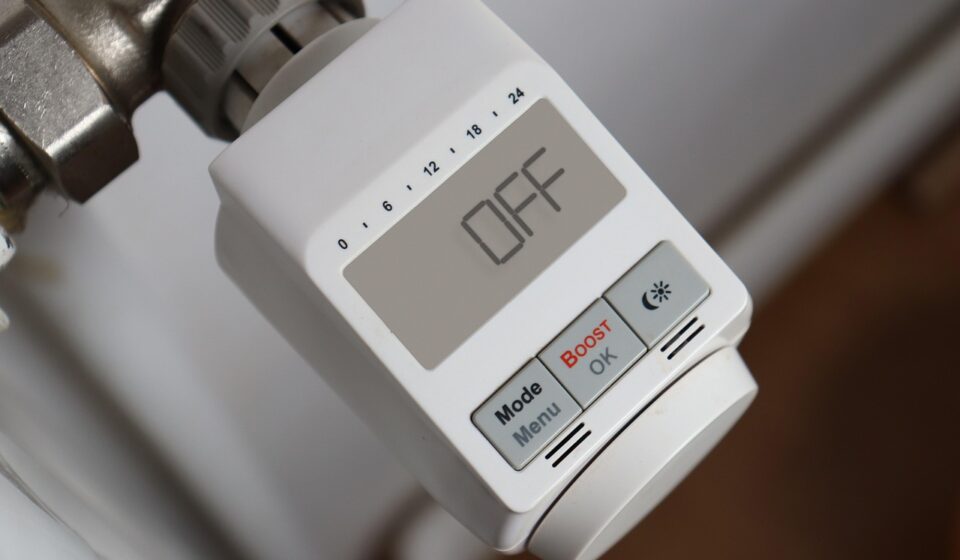
A smart thermostat is not a stand-alone energy saver. It is a connected control layer for the heating and cooling equipment that already uses a large share of household energy. Its main value is making setback schedules, remote adjustments, occupancy detection and energy reports easier to use consistently. Public guidance from EPA ENERGY STAR and the U.S. Department of Energy points to meaningful savings when temperature settings are managed well, but the result depends on climate, HVAC type, insulation, household routines and whether the thermostat is configured properly. In practical terms, a smart thermostat is worth considering when it solves a real control problem: empty rooms being conditioned, schedules being ignored, or comfort varying across the home.
For connected-home hardware buyers, the smart thermostat is also a good example of how smart devices are moving beyond novelty and becoming part of home infrastructure. It touches energy bills, grid flexibility, software support, privacy and interoperability at the same time. For more connected-home coverage, visit our Smart devices category.

Where the savings come from
The basic savings mechanism is simple: use less heating or cooling when full comfort is not needed, then restore comfort before people return or wake up. A manual thermostat can do this if someone adjusts it every day. A programmable thermostat can do it if the schedule is set correctly and kept up to date. A smart thermostat reduces the effort through app control, learning schedules, geofencing, occupancy sensors, adaptive recovery and alerts.
ENERGY STAR says heating and cooling take nearly half of the average U.S. household energy bill, which is why even small control improvements can matter. It also reports that ENERGY STAR certified smart thermostats are evaluated using actual field data rather than only lab assumptions. Separately, Department of Energy Energy Saver guidance says setting a thermostat back 7-10°F for at least eight hours a day can save as much as 10% a year on heating and cooling. That DOE figure describes the value of disciplined temperature setback, not a guaranteed result from any specific product.
This distinction is important. A smart thermostat may deliver limited savings in a household that already uses a well-tuned programmable thermostat and follows a regular schedule. It may be more valuable in a home where people often forget to adjust the thermostat, leave at unpredictable times, or want better control of vacation and sleep settings. The technology works best when it changes behavior without requiring daily attention.
Evidence and standards to know before buying
The most useful public sources answer different parts of the buying question. ENERGY STAR focuses on certified product performance. DOE explains operating practices. EIA provides household adoption data. CSA tracks interoperability standards. NIST and FCC guidance help frame connected-device security. Taken together, they show that smart thermostat value is both an energy-management issue and a smart home management issue.
| Source or standard | What it says | Why it matters for buyers |
|---|---|---|
| EPA ENERGY STAR | Certified smart thermostats are evaluated using field data and are commonly associated with average heating and cooling bill savings around 8% or about $50 per year. | Certification is a stronger signal than vague marketing claims, but local savings still vary. |
| U.S. Department of Energy Energy Saver | Thermostat setback of 7-10°F for at least eight hours a day can save up to 10% annually on heating and cooling. | The savings come from controlled setpoints and schedules, not simply from Wi-Fi connectivity. |
| U.S. Energy Information Administration 2020 RECS | Smart or internet-connected thermostats were reported in about 10% of U.S. households, while programmable thermostats were much more common. | Many homes still have upgrade potential, but adoption alone does not prove correct usage. |
| Connectivity Standards Alliance Matter | Matter has included thermostat support since its early releases, and Matter 1.4 added thermostat scheduling and preset capabilities such as vacation and home or away modes. | Interoperability is improving, but buyers still need to check which features a specific device and platform support. |
| NIST and FCC consumer IoT security guidance | Connected devices should be evaluated for update support, secure configuration, device identity and data protection; the FCC Cyber Trust Mark is a voluntary labeling program for qualifying consumer IoT devices. | A thermostat collects occupancy and routine-related data, so security and privacy are practical buying factors. |
Compatibility is the first decision
The most common smart thermostat mistake is shopping by app features before confirming HVAC compatibility. In North America, many mainstream smart thermostats are designed for low-voltage 24V HVAC systems. Manufacturer support documents from major thermostat brands state that high-voltage line-voltage systems and many millivolt systems are not compatible with their mainstream low-voltage models. Electric baseboard heating, some wall heaters, older floor heaters and certain condo fan-coil systems may require a different thermostat type or a professional assessment.
Check the wiring before choosing a model
Before buying, turn off HVAC power and document the existing thermostat wiring with clear photos. Look for terminal labels such as R, Rc, Rh, C, W, Y, G, O/B, AUX, E and similar markings. The C wire, or common wire, matters because many smart thermostats need continuous power for Wi-Fi, the display, sensors and software functions. Some models offer power adapters or power extender kits for homes without a C wire, but these accessories are still limited to compatible HVAC systems. If the wiring is unlabeled, unusually thick, stranded, or connected with wire nuts in a high-voltage box, stop and ask an HVAC professional or electrician.
Match the thermostat to the HVAC equipment
Compatibility also depends on what the system is designed to do. A conventional furnace and central air conditioner may need only basic heat, cool and fan control. A heat pump may require support for reversing valve configuration, auxiliary heat and emergency heat. Multi-stage equipment, humidifiers, dehumidifiers, fresh-air ventilators and multi-zone systems add more complexity. Proprietary communicating HVAC systems can be especially restrictive because the thermostat may exchange data with the equipment in a brand-specific way. In those cases, replacing the control with a generic smart thermostat can remove functions or cause improper operation.
Renters and condo owners should also check building rules. A thermostat may be part of a shared fan-coil, boiler, heat pump or building automation setup. Even if the wall device looks simple, the system behind it may not be.
Features that deserve attention
Most smart thermostats advertise similar benefits, but the details affect daily use. A practical buying process starts with comfort and control needs, not the longest feature list.
Schedules, learning and geofencing
Scheduling remains the foundation. If the routine is predictable, a clear weekly schedule may be more reliable than an aggressive learning mode. If the routine changes often, geofencing and occupancy detection can reduce waste when the home is empty. The trade-off is data sharing: geofencing requires location access from one or more phones, while occupancy features use device or room sensor signals. Buyers should make sure the app allows easy overrides, vacation modes and temporary holds, because real homes rarely follow perfect schedules.
Remote sensors and room comfort
Remote temperature or occupancy sensors can be more useful than a polished thermostat display. A thermostat mounted in a hallway may not reflect conditions in a sunny bedroom, a basement office or a nursery. Remote sensors can help the system prioritize occupied rooms or average temperatures across spaces. They do not turn a single-zone HVAC system into true room-by-room zoning, but they can make control decisions less dependent on one wall location.
Reports and maintenance alerts
Energy reports, runtime charts and filter reminders can help users understand how often heating or cooling runs and when settings may be wasteful. These reports should be treated as guidance, not audited utility data. The most useful alerts are practical: unusually long runtime, extreme indoor temperature, filter replacement reminders, humidity warnings or possible system faults. For households that travel, remote alerts can also provide early warning before a comfort problem becomes property damage. See also: BUYING GUIDES.
Matter and platform support
Interoperability is improving, but it remains uneven. The Connectivity Standards Alliance released Matter 1.6 in June 2026, and Matter has continued to expand setup and multi-ecosystem capabilities. For smart thermostats, however, a Matter logo does not automatically mean every native app feature is exposed to every platform. A thermostat may allow basic temperature control in Apple Home, Google Home, Amazon Alexa or another ecosystem while keeping advanced schedules, sensors, energy reports or utility program settings in the manufacturer app. Buyers should check the exact model, the Matter version supported, and the features available in the platform they actually use.
Privacy and security are part of the product
A smart thermostat can reveal more than temperature. It may process schedules, occupancy, device interactions, location-based presence, energy use patterns and HVAC runtime. That data can improve automation, but it also raises standard connected-device questions: what data is collected, how long it is retained, whether it is shared, how accounts are protected and how long security updates are provided.
NIST IoT cybersecurity guidance emphasizes baseline capabilities that help protect devices and data, including secure configuration, software update mechanisms and device identification. The Federal Communications Commission has also established a voluntary U.S. Cyber Trust Mark program for eligible consumer IoT products that meet cybersecurity criteria. These programs do not replace careful buying decisions, but they show that smart home security is now part of mainstream product evaluation.
Before installation, set a strong unique account password, enable multi-factor authentication if available, update the thermostat firmware, review household member permissions and remove old users when people move out. If the router supports it, placing IoT devices on a guest or segmented network can also reduce exposure. The thermostat should remain easy to operate at the wall when the internet is down; connected features should not eliminate basic local control.
A practical upgrade checklist
- Confirm whether the existing system is low-voltage 24V, line voltage, millivolt, proprietary communicating, heat pump, multi-stage or zoned.
- Photograph the current wiring before removing anything, and verify whether a C wire or approved power accessory is needed.
- Check whether the thermostat supports your heating type, cooling type, auxiliary heat, fan control and any accessories.
- Look for ENERGY STAR certification if energy savings are a major reason for the purchase.
- Decide whether you need remote room sensors, geofencing, learning schedules, humidity control or only basic app scheduling.
- Verify app, voice assistant and Matter support at the model level, not only at the brand level.
- Read privacy settings before enabling location access, energy reports or utility demand response features.
- Make sure manual controls, holds and vacation settings are simple enough for everyone in the household.
- Use professional installation when wiring is unclear, high voltage may be present, or the HVAC system is expensive or complex.
Frequently asked questions
Can a smart thermostat save money if I work from home?
Yes, but the savings may be smaller than in a home that is empty for long periods. The key is to use sleep settings, room sensors, modest setbacks and vacation modes rather than relying only on away schedules. If comfort needs stay constant all day, the thermostat has fewer opportunities to reduce runtime.
Is ENERGY STAR certification necessary?
It is not legally required, but it is a useful filter. ENERGY STAR certification indicates that the product has been evaluated under a recognized program based on field savings criteria. Non-certified models may still be useful, but buyers should be more cautious about unsupported savings claims.
Do I need Matter support in a smart thermostat?
Matter support is helpful if you want a thermostat to work across multiple smart home ecosystems, but it should not be the only buying criterion. Check which thermostat functions are available through Matter and which remain limited to the manufacturer app. Basic temperature control is not the same as full feature parity.
Can I install a smart thermostat myself?
Many homeowners can install a compatible low-voltage thermostat by following manufacturer instructions, but not every system is simple. Use a professional when the current thermostat controls line voltage, the wiring does not match standard labels, the system has multiple stages or zones, or the HVAC equipment uses proprietary communicating controls.
Will a smart thermostat work without Wi-Fi?
Most models should still provide basic heating and cooling control at the wall, but remote control, cloud reports, voice assistants, geofencing and software updates usually need connectivity. Before buying, confirm how the model behaves during internet outages and whether schedules continue locally.
Bottom line
A smart thermostat is a practical upgrade when it is compatible with the HVAC system and its automation features match real household behavior. The most credible value comes from easier setbacks, better occupancy control, remote access, useful alerts and clearer energy feedback. The limitations are just as important: savings are not guaranteed, advanced features can depend on cloud services, and privacy settings deserve attention. Start with wiring and HVAC compatibility, then evaluate certified energy performance, room comfort, platform support and security. That order leads to a better decision than choosing by brand recognition or app screenshots alone.